An idyllic childhood in a large house amid fields in Northern Ireland, and this lush fish pie recipe, make up Rowley Leigh’s taste of home ...
Latest Post
Thursday, March 23, 2017
A cooked breakfast needn’t mean a pile of grease. Try introducing baked eggs to dal or scrambling some fragrantly spiced tofu to wrap in a warm tortilla for a healthy start to the day A cooked breakfast needn’t mean a pile of grease. Try introducing baked eggs to dal or scrambling some fragrantly spiced tofu to wrap in a warm tortilla for a healthy start to the day
Weekend breakfasts deserve more than the neat routine of Monday to Friday: porridge or marmalade on toast just don’t cut it for me on a Sunday. I don’t even crave a weekend fry-up these days. No, I need something substantial, but without the grease, which is where some experimentation has come in lately.
On the weekends we are at home, those moments between getting up and heading out are precious; rare slices of time when the phone doesn’t ring. My little boy busily runs laps of the kitchen as I cook with the sole purpose of making something delicious. Here are two things I have cooked in these morning windows, and they’re set to be cooked over and over.
I first ate tofu scramble years ago on a trip to California: it makes a welcome change from eggs. Tofu has a pleasing bounciness suited to cooking this way. It soaks up the flavours of its bed partners: big, brave notes of smoked paprika, garlic and the deeply savoury, almost inky, black beans.
Today’s other recipe was an attempt to partner up two of my favourite things: dal and baked eggs. We now eat this for breakfast, lunch or dinner. I use split red lentils, so it’s quick and only uses one pan.
Black bean and tofu scramble
The tofu I use here is neither the silken stuff nor the firm stuff. It’s usually just labelled as tofu in water; it crumbles nicely in your fingers when you break it up. Silken tofu will work too, although the scramble will be a little softer. I always try to buy the best tofu I can: most supermarkets stock good organic stuff these days – and some small UK-based producers are cropping up at markets too.
Serves 4 2 ripe avocados Salt and black pepper 2 limes 250g of cherry or winter tomatoes, roughly chopped 2 red chillies, roughly chopped 4 flour or corn tortillas Olive oil 4 spring onions, chopped 2 garlic cloves A small bunch of coriander, leaves picked, stalks finely chopped 1 tsp hot smoked paprika 400g tin of black beans (or 250g if home-cooked), drained 400g crumbly tofu (see note above)
1 First, mash the avocados with a little salt and black pepper, plus the zest of 1 lime and half its juice.
2 Add the red chillies and a good pinch of salt and pepper to the chopped tomatoes. Squeeze over the juice of the other half lime.
3 Warm or toast the tortillas and keep them warm: I do this by holding them over a flame on each side for 30 seconds or so, then wrapping in foil and keeping in a low oven.
4 Next, heat a frying pan over a medium heat and add a little oil. Add the spring onions, garlic and chopped coriander stalks. Cook for around 2 minutes, or until the edges of the garlic are beginning to brown.
5 Add the smoked paprika and a little more salt and black pepper, then cook for another minute.
6 Add the drained black beans to the pan and fry them for around 2 minutes, or until they have dried out a little. Add the crumbled tofu, turn the heat up and cook until the tofu has begun to catch and colour a little. Take off the heat and season well with salt and pepper.
7 Pile on to the toasted tortillas, with a little chilli and the coriander leaves strewn over, and serve with the avocado and tomatoes for spooning on top.
Sunny side up: turmeric dal baked eggs. Photograph: Matt Russell for the Guardian
Turmeric dal baked eggs
You could up the chilli here if that’s your thing – in the morning I like to keep it gentle.
Serves 4 1 tbsp olive oil 1 thumb-sized piece of ginger, finely chopped 2 garlic cloves, finely chopped A small bunch of coriander, leaves picked, stalks finely chopped 1 tsp cumin seeds 1 tsp ground coriander 1 tsp ground turmeric, or a small thumb‑sized piece of fresh root, grated 300g split red lentils Salt and black pepper 200g spinach, washed 4 eggs 1 lemon 1 green chilli, finely sliced Yoghurt, to serve
1 Fill and boil the kettle. Heat the oil in a large pan with a lid. Add the ginger and garlic, then the coriander stalks, stirring frequently until the edges of the garlic pick up a little colour.
2 Add the spices and cook for a minute or so to toast and release the oils. Add the lentils and stir to coat in the oil. Add 1 litre of water from the kettle and a good pinch of salt, then stir well. Cook on a low heat for 20-30 minutes, or until the lentils are well cooked and the mixture has thickened. You want it to be thick enough to just about hold its shape when you make a little well for your eggs (see step 5).
3 Add the spinach and put the lid on for 2 minutes, or until the leaves have wilted, then stir well.
4 When you are almost ready to eat, squeeze in the juice of the lemon and taste the lentils, adding a little more salt and pepper if you need to.
5 Make four wells in the lentils, then crack an egg into each well and pop the lid back on until the egg whites are firm and the yolks are still runny: this should take about 5 minutes.
6 To serve, scatter the eggs with the chilli, coriander leaves and yoghurt on the side for everyone to help themselves.
•Anna Jones is a chef, writer and author of A Modern Way to Eat and A Modern Way to Cook (Fourth Estate); annajones.co.uk; @we_are_food
After finishing Robin Stevens’s much loved children’s mystery, Kate Young makes some of the biscuits – so named for the raisins in them – eaten in the book By Kate Young for The Little Library Café, part of the Guardian Books Network After finishing Robin Stevens’s much loved children’s mystery, Kate Young makes some of the biscuits – so named for the raisins in them – eaten in the book By Kate Young for The Little Library Café, part of the Guardian Books Network
Once we had collected our biscuits - only squashed flys on Saturdays, which I think is hardly worth it, though Daisy loves them - Daisy and I shook off the rest of the third form and went in search of Jones...
Murder Most Unladylike, Robin Stevens
---
My sister Lucy and I grew up with a very large number of grandparents. Our parents are divorced, both remarried, and some of their parents are too. They all lived around Brisbane when we were growing up, and so were a large part of our childhood. My great-grandmother lived on her own in a house quite near us and my memories of her almost all revolve around food: like the Christmas puddings that hung from broomsticks around her dining room for six months of the year.
She also always had a packet of squashed fly biscuits in the tea cupboard. Lucy and I were intrigued by them; their name alone was enough to guarantee our interest. But, like Hazel, in the quote above, they never appealed very much when it came to the eating of them. I’d always rather put my hand into the jar that held Iced Vovos instead. But I came to love them: they remind me a bit of my beloved Eccles cakes, full of spiced currants, and sweet on top.
I read Murder Most Unladylike recently, after it was recommended by a friend. It is full of all of my favourite things: boarding school politics, crimes, clever girls figuring things out, and plenty of food. I was also instantly taken with Hazel, who is struggling to fit in at her new school in a new country but strikes up a Holmes/Watson friendship with Daisy. It’s a true gem of a book - I’m hooked on the series now, and have already sent my nannying charge back to school library in search of the next.
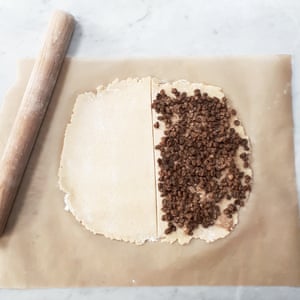
‘Slice it in half, and cover one half with the currants...’ Photograph: Kate Young of The Little Library Café
Equipment Mixing bowl Cling film Greaseproof paper Rolling pin Knife Baking tray Pastry brush Cooling rack
1. To make the biscuit dough, rub the butter into the flour until it resembles breadcrumbs. Add 60g sugar and the milk, and bring together into a dough. Rest in the fridge for at least 30 minutes.
2. Preheat the oven to 200C. Toss the currants with 1tbsp sugar and the cinnamon. Roll the dough out into a rough square, around 30cm wide. Slice it in half, and cover one half with the currants. Flip the other half of the dough over this, and then roll out again until around 7mm thick, trapping the currants between two layers of dough.
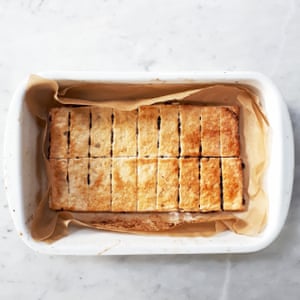
3. Trim the edges and score rectangles in the dough, not slicing all the way through. Place the slab of biscuits on a baking tray, brush with beaten egg, sprinkle with sugar, and bake for 20 minutes. Once golden, allow to cool for a couple of minutes before breaking into finger biscuits and serving with tea.
Photograph: Kate Young of The Little Library Café
Fragrant and fabulous: once you’ve cooked with fresh curry leaves, you’ll never look back Fragrant and fabulous: once you’ve cooked with fresh curry leaves, you’ll never look back
Whenever I see a big bunch of fresh curry leaves, I buy them. If they’re not on your supermarket shelves (they’re sometimes there, but often not), you’ll find them in most Indian or south-east Asian grocers. They freeze well, so don’t worry about buying too many, not least because most recipes involving fresh leaves tend to ask for quite a lot of them. Despite the association with heat that the word “curry” brings to mind, curry leaves are all about their fresh citrus fragrance. Yes, they’re often used in a curry and feature in ingredients lists alongside “curry powder” (in reality, a blend of ground spices), but all have very different characteristics. Don’t be tempted by freeze-dried curry leaves, though: they may be widely available, but they lack the heady aroma that makes me seek (and sniff) out fresh ones.
Crisp prawns with oats, chilli and ginger
Get everything chopped and ready before you start cooking, and this will be on the table in minutes. The kaffir lime leaves need to be fresh, too; if you can’t get hold of them fresh, leave them out. Serve with stir-fried Asian greens. Serves four.
50g instant porridge oats 500g peeled raw king prawns, patted dry with kitchen paper Salt and black pepper 40g cornflour 200ml vegetable oil 40g unsalted butter 3 red chillies, deseeded and julienned 4cm piece ginger, peeled and julienned 2 large garlic cloves, peeled and thinly sliced 1½ tsp black mustard seeds 5 stems fresh curry leaves (ie, about 50 leaves) 8 fresh kaffir lime leaves, thinly sliced 1 tsp sesame oil 4 large spring onions, trimmed and thinly sliced 2 tbsp sesame seeds, toasted 1 tsp soft dark brown sugar 2 limes, halved, to serve
Heat the oven to 200C/390F/gas mark 6. Spread the oats out on a small oven tray, roast for six minutes, until golden-brown, then remove and leave to cool.
In a bowl, mix the prawns with a quarter-teaspoon of salt and a good grind of pepper. Put the cornflour in a separate bowl. Heat the oil in a medium-sized saute pan on a high flame and, once hot, dip four to five prawns one at a time into the cornflour and then drop them straight into the hot oil. Fry for a minute or two, turning halfway, until just cooked. Use a slotted spoon to lift out the prawns and drain on a plate lined with kitchen paper while you flour and fry the rest.
Melt the butter in a large frying pan on a high heat and, once it starts to foam, fry the chilli, ginger and garlic for two minutes, stirring, until the garlic starts to brown. Add the mustard seeds, curry leaves and kaffir lime leaves, fry for 30 seconds, stirring continuously, then add the oats and sesame oil and fry for one to two minutes, stirring, until the oats are golden-brown and crunchy. Add the spring onions, sesame seeds, sugar, prawns, a third of a teaspoon of salt and a good grind of black pepper. Stir through for about 30 seconds, then serve hot, with half a lime alongside each portion.
Spiced root vegetable gratin
Again, if you can’t get fresh kaffir lime leaves, just leave them out. Serves eight.
40g unsalted butter 2 tbsp olive oil 1 large onion, peeled and thinly sliced 2 garlic cloves, peeled and crushed 1 tbsp medium curry powder 10 fresh kaffir lime leaves, finely shredded 4-5 stems fresh curry leaves (ie, about 40-50 leaves) 1½ tsp mustard seeds Salt 300ml double cream 300ml vegetable stock 1 small celeriac, peeled, cut in half and then into 0.5cm-thick slices 1 swede, peeled, cut in half and then into 0.5cm-thick slices 2 large parsnips, peeled and cut into 0.5cm-thick slices 2 turnips, peeled and cut into 0.5cm-thick slices
For the topping 65g fresh white breadcrumbs (from 1-2 medium slices, crusts removed) 50g blanched peanuts, roughly chopped 100g cheddar, roughly grated 1½ tsp mustard seeds 2 tsp coriander seeds, gently crushed ¼ tsp turmeric 15g unsalted butter, at room temperature, diced
Heat the oven to 200C/390F/gas mark 6. Put all the topping ingredients in a medium bowl with a quarter-teaspoon of salt and rub together with the tips of your fingers, until the mix is the texture of chunky breadcrumbs.
In a large saucepan for which you have a lid, heat the butter and oil on a medium-high flame. Once the butter starts to melt, fry the onion for eight to nine minutes, stirring a few times, until golden-brown and soft. Add the garlic and curry powder, stir constantly for a minute, then add the lime leaves, curry leaves, mustard seeds and a teaspoon of salt. Fry for another minute or two, until the curry leaves are aromatic and starting to turn crisp, then stir in the cream, stock and sliced vegetables. Bring to a boil, turn down the heat to medium, cover and simmer for seven minutes, stirring from time to time, until the vegetables start to soften.
Transfer the vegetable mix to a high-sided, 22cm x 32cm baking dish, spreading out the veg so they are evenly distributed, then cover with foil and bake for 40 minutes, until the vegetables are cooked but there is still quite a lot of liquid in the dish. Remove and discard the foil, then press down on the vegetables with a slotted spoon, so they’re submerged in the liquid. Sprinkle over the topping and return to the oven for 15-20 minutes, until the topping is golden-brown and the gratin has thickened. Leave to rest and cool for 10 minutes before serving.
Mulligatawny
Yotam Ottolenghi’s mulligatawny. Photograph: Louise Hagger for the Guardian. Food styling: Emily Kydd. Prop styling: Jennifer Kay
I love the ready-made crisp, fried shallots you can buy in jars from Asian food stores, but if you can’t find any, don’t worry: you’ll still have plenty of crunch from the peanuts. Red Camargue rice looks particularly good here, but other rice (brown or basmati, say) also works. Serves six as a main course.
550g skinless and boneless chicken thighs (halved if on the large side) 5 garlic cloves, peeled and crushed 1½ tbsp garam masala 1 tsp paprika ½ tsp cayenne pepper ½ tsp turmeric Salt 3 tbsp coconut oil 1 onion, peeled and roughly chopped 4cm piece fresh ginger, peeled and roughly chopped 40 fresh curry leaves (ie, from about 4 sprigs) 2 tsp black mustard seeds 100g red split lentils 1 small butternut squash, peeled, deseeded and cut into 3cm cubes 3 plum tomatoes, quartered 1 litre chicken stock 400ml tinned coconut milk 100g red Camargue rice 10g coriander leaves, roughly chopped 60g roasted salted peanuts, roughly chopped 30g shop-bought crisp fried shallots (optional) 3 limes, halved, to serve
Mix the chicken in a medium bowl with two of the crushed garlic cloves, half a tablespoon of garam masala, the paprika, cayenne, and a quarter-teaspoon each of turmeric and salt, and set aside.
In a large saucepan, for which you have a lid, heat two tablespoons of coconut oil on a medium-high flame and, once hot, fry the onion for eight minutes, stirring a few times, until golden brown and soft. Add the remaining garlic, a tablespoon of garam masala, a quarter-teaspoon of turmeric, the ginger, curry leaves and mustard seeds, and fry for two minutes, stirring frequently. Stir in the lentils, squash and tomatoes, then pour in the stock and coconut milk, and add a teaspoon and a quarter of salt. Bring to a boil, turn down the heat to medium, cover and simmer for 30 minutes, until the squash and lentils are soft.
Using a hand blender, blitz the soup until it’s smooth and thick (or whizz it in a liquidiser, though you’ll need to do so in batches).
While the soup is simmering, put the rice in a separate saucepan filled with plenty of salted water. Bring to a boil, then turn down the heat to medium and simmer for 30-35 minutes, until cooked. Drain and set aside.
Heat a tablespoon of oil in a large, nonstick frying pan on a high flame, then fry the chicken for 10-12 minutes, turning the pieces halfway through the cooking, until dark-golden and crisp on both sides. Remove from the heat, and shred the meat in long, 2cm-wide strips (I use my fingers, but a knife and fork will do).
To serve, divide the warm rice between six bowls and ladle over the soup. Top with the chicken strips and dribble any leftover oil from the pan on top. Sprinkle with the coriander, peanuts and the fried shallots, if using, squeeze half a lime on top of each portion and serve at once.
• Yotam Ottolenghi is chef/patron of Ottolenghi and Nopi in London.
This article was edited on 20 March 2017. An earlier version included instructions to shred the chicken from the bone in the mulligatawny method, yet the ingredients list features skinless and boneless chicken thighs. This has been corrected.
There are no shortcuts for this giant of French classical cooking, but that doesn’t mean it’s not manageable. What cuts of beef are best? Can bacon replace salt pork? And how pricey a wine do you need to use? There are no shortcuts for this giant of French classical cooking, but that doesn’t mean it’s not manageable. What cuts of beef are best? Can bacon replace salt pork? And how pricey a wine do you need to use?
It’s a mystery to me how this giant of the French classical repertoire has escaped the clutches of this column for so long. Richard Olney (another big beast of the Gallic cookery scene) describes boeuf bourguignon as “probably the most widely known of all French preparations”, while Elizabeth David introduces it as “a favourite among those carefully composed, slowly cooked dishes, which are the domain of French housewives and owner-cooks of modest restaurants rather than of professional chefs”.
Sounds manageable. Yet Olney goes on, slightly worryingly, that “beef burgundy certainly deserves its reputation – or would if the few details essential to its success were more often respected. There is nothing difficult about its preparation, but there are no shortcuts.” And David doesn’t help the situation, with the airy assertion that “such dishes do not, of course, have a rigid formula, each cook interpreting it according to her taste”.
According to Larousse Gastronomique, la bourguignonne refers to anything (generally “poached eggs, meat, fish or sauteed chicken”) cooked with red wine and “usually garnished with small onions, button mushrooms and pieces of fat bacon”. That much we know. Everything else, it seems, is up for grabs.
The beef
While, like most stews, this will work with almost all slow-cooking cuts, chefs have their own particular preferences. Simon Hopkinson and Lindsey Bareham call for “well-hung sinewy beef – chuck, shoulder or shin perhaps” in The Prawn Cocktail Years. Anthony Bourdain’s Les Halles Cookbook specifies paleron of beef, which, a helpful butcher informs me, means featherblade. Richard Olney’s much lauded French Menu Cookbook suggests Desperate Dan-style heel (which takes a while to track down) and Michel Roux Jr’s The French Kitchen opts for “braising beef (chuck is good but cheek is best)”. Harry Eastwood is also a fan of cheek, writing in Carneval that: “My father introduced me to the joys of eating cheeks … [and] it turns out that beef cheeks are the perfect vehicles for a bourguignon since they absorb all the flavours in the pan and the meat surrenders completely.”
Anthony Bourdain specifies paleron (featherblade) of beef for his boeuf bourguignon. Photograph: Felicity Cloake for the Guardian
Featherblade proves the least successful with testers – it’s just too lean, which makes it seem rather dry in comparison with the more gelatinous cuts. A good well-marbled chuck (not always the case with supermarket versions) does the job, and the more gelatine-rich shin and heel are even better, but my own favourite is the cheek, which seems to offer the best balance between meat and melt. Cut it into relatively large chunks because, as Hopkinson and Bareham observe, “A true boeuf à la bourguignonne is not about little cubes of meat stewed in Hirondelle.”
Olney’s is the only recipe to marinate the meat before use; Roux cautions against it, warning that “I find this makes for a gamey flavour that’s not entirely true to the original”. Some testers agree, but my problem with it is that, far from tenderising the meat, it seems oddly to have dried it out slightly. Whether or not the wine is actually to blame, the meat should have plenty of time to absorb its flavour in the oven, rendering such a step pointless.
Hopkinson and Bareham also add a gelatine-rich pig’s trotter to the stew, presumably in order to give it body and richness. This certainly works, but trotters are not always easy for everyone to get hold of. One tester suggests that the more commonly available oxtail might do the same job even better is a good one. You can leave it on the bone if you like, although I prefer to strip it off after cooking so the meat is more evenly distributed.
Marinaded meat in Richard Olney’s beef bourguignon. Photograph: Felicity Cloake for the Guardian
The pork
Boeuf bourguignon almost always contains cured pork, too – after all, this is a French recipe, and two meats are better than one. Certainly my testers are not happy with its omission in Bourdain’s dish. Olney, who I am quickly learning to fear, warns me that “if good lean salt pork is not available, omit it; do not substitute bacon, the smoky flavour of which … distorts and muddles the otherwise clean, distinct flavour of the sauce”. Proving that one man’s muddle is another’s masterpiece, Eastwood’s smoked lardons and Roux’s smoked streaky don’t seem to go down too badly with the panel, but the simpler savoury flavour of green bacon seems less likely to distract from the wine, which is, after all, the whole point of the dish. (If you have access to salt pork, you may wish to poach it briefly before use to tame its aggressive salinity, as Olney does. There’s no need with bacon or pancetta – you’ll only spoil it.)
The vegetables
The traditional Burgundian garnish of button mushrooms and miniature onions ought to be non-negotiable, preferably sauteed until golden in the fat from the bacon, as Eastwood, Olney, Hopkinson and Bareham suggest. In this way, they absorb some of its savoury richness. The Prawn Cocktail Years recipe adds the vegetables to the stew for the entire cooking time, while Roux and Olney cook them through separately, which is a bit of a faff, especially when the former demands they’re done in three separate pans. All very well with a kitchen brigade at your disposal, but I prefer Eastwood’s method, which adds the the sauteed vegetables to the beef for the final half hour of cooking instead. Much easier.
Instead of the tiny pearl onions most recipes recommend, Bourdain uses the ordinary kind, thinly sliced and caramelised. Some testers like the sweetness they add to the dish, but we all agree their assertive flavour does give his version something of the soupe à l’oignon. If you can’t find pearl onions or another diminutive variety, small shallots are better than nothing.
Simon Hopkinson and Lindsey Bareham add a pig’s trotter. Photograph: Felicity Cloake for the Guardian
Carrots are also common; the baby variety favoured by Eastwood and Roux make the most pleasing garnish aesthetically, but ordinary sized ones, cut into large chunks, work just as well in the flavour department. (The same goes for ordinary mushrooms as opposed to the button sort.)
The liquids
The principal flavour here ought to be dry, fruity red wine of the kind produced in Burgundy, although for those of us buying wine in the UK, I’m not convinced that sticking an actual Burgundian pinot noir into the oven for 3 hours isn’t a criminal waste of both wine and money (Olney demands a “good red burgundy” no less). I make one with the authentic product (the cheapest I can find over here is nearly £9) and the rest with an inoffensive but rather cheaper red from the south-west, and no one remarks on the difference, even when it’s pointed out. So, unless you have an extremely discerning palate, I’d recommend saving your cash for a good burgundy to drink with it instead.
Puzzlingly, Bourdain uses only a cup of wine in his version, which might explain why everyone describes it as more like beef stew than a bourguignon, with one observing that, “If you added some dumplings it would make a lovely hotpot.” A whole bottle is required for maximum impact, preferably reduced to concentrate its flavour: Olney does so after cooking, but this involves lifting out the meat and vegetables and then warming everything back up together so it seems far easier to do all the simmering first, as Roux and the Prawn Cocktail Years recommend, so the dish can be served straight from the oven. While you’re at it, add a few aromatics, as the latter recipe suggests, for a more rounded gravy.
A splash of brandy, although not absolutely necessary, does add a little more complexity to the dish. If you don’t have it, however, it’s not a disaster.
None of that cheek ... Harry Eastwood’s beef bourguignon. Photograph: Felicity Cloake for the Guardian
Other liquids
Most recipes also use stock of some kind, generally beef, veal or even, for a lighter gravy, Eastwood’s chicken or vegetable alternative. Bourdain tops up the wine with water instead, and even with his optional couple of spoonfuls of demi glace, or concentrated veal stock, testers find his gravy thin and a little insipid. “It’s just very … ordinary.” And ordinary is definitely not what we’re after here.
Flouring the meat will both help it brown more quickly, and thicken the sauce more quickly, though it’s certainly not essential if you would prefer to keep the dish gluten-free.
Aromatics
Like any respectable French classic worth its salt, boeuf bourguignon benefits from a bouquet garni of bay, thyme and parsley, and a little garlic. If, after all that hard work, you feel it needs a little help in the flavour department for some reason (and sometimes it happens), add a dash of Worcestershire sauce before serving, as Eastwood does, although it ought not to require any tomato puree, dijon mustard or indeed Hopkinson and Bareham’s redcurrant jelly. Add a dash of lemon juice if you think the dish needs it, but I like mine unapologetically rich and sticky.
Cooking and serving
You can cook boeuf bourguignon on the hob – it’s no doubt the original method – but I find it much easier to keep the heat constant in a moderate oven. (Plus it’s easier to clean up after yourself with the pot safely bubbling away out of sight.)
Bourguignon is traditionally served with steamed or boiled potatoes, but Roux proves he’s a true Brit by preferring his with mash. Gordon Ramsay’s celeriac puree would also work, as would Julia Child’s buttered noodles or rice. Delia Smith, meanwhile, goes for full-on flavour with pommes boulangère or ratatouille. I agree with Roux, but each to their own – just as long as there’s wine.
The perfect boeuf bourguignon. Photograph: Felicity Cloake
(Serves 6) 1 bottle of fruity, relatively light dry red wine 1 onion, peeled and cut into 6 wedges 1 large carrot, scrubbed and cut into 2cm chunks 2 garlic cloves, peeled and squashed with the back of a knife 1 bay leaf, Small bunch of parsley, plus a handful for garnish 2 sprigs of thyme 2 tbsp olive oil 35g butter 200g unsmoked bacon lardons or a thick piece of unsmoked bacon cut into 2cm cubes 24 pearl onions, or 12 small shallots 18 baby carrots 200g button mushrooms 2 tbsp flour 1kg beef cheeks, cut into 3cm chunks 400g oxtail 60ml brandy 250ml good beef stock
Put the wine in a pan with the onion, carrot, garlic and herbs and bring to the boil. Simmer for 30 minutes until reduced by about half. Heat the oven to 150C.
Heat the oil and butter in a large casserole dish over a medium-high heat, and when the foam has died down, add the bacon. Fry until golden, then scoop out with a slotted spoon and set aside.
Add the bay carrots and mushrooms to the pan and saute until lightly golden, then scoop into a fresh bowl. Add the onions, turn down the heat slightly, and fry until just beginning to brown. Meanwhile, put the flour on a plate, season, then roll the beef in it. Add the onions to the other vegetables and turn up the heat slightly in the pan.
Fry the beef in batches until crusted and deeply browned, being careful not to overcrowd the pan or it will boil in its own juices (add a little more oil if it feels like it’s burning rather than browning). Scoop out and set aside in a bowl. Turn up the heat.
Add the brandy to the pan and scrape to dislodge any caramelised bits on the bottom. Strain in the reduced wine (discarding the vegetables), followed by the stock. Return the cheeks and oxtail to the pan and bring to a simmer.
Cover and bake for two and a half hours, then tip in the pearl onions, mushrooms and carrots and bake for another half an hour.
Scoop out the oxtail and strip the meat from the bones. Stir back into the pan with the lardons and season to taste. Add the remaining parsley and serve with mashed potatoes.
Is it a false economy to make boeuf bourguignon with any other wine than red burgundy? What other wines would you suggest serving it with? Which classic Gallic recipes would you like to see?
Deep flavours of anchovy with a hint of onion and garlic infuse this definitively Sicilian pasta dish, the sweet flavours insistent and rich with the promise of spring Deep flavours of anchovy with a hint of onion and garlic infuse this definitively Sicilian pasta dish, the sweet flavours insistent and rich with the promise of spring
As a little girl I prayed for tonsilitis. Once I got it, I would have a week off school so they could whip out my tonsils, then, like a boy in my class, I too would be prescribed ice-cream and jelly for breakfast. Despite getting on my knees and repeating hail Marys, I got neither tonsillitis, nor the soothing rewards. Unless your tonsils are being removed, ice-cream is not an appropriate way to start the day, I might well have been told. But try telling this to a Sicilian – my partner for example – who, from spring to late autumn, thinks gelato and granita a perfectly ordinary and sensible way to begin the day.
The first time I saw my childhood fantasy alive and kicking was in Catania, a lively city on the east coast in the shadow of Mount Etna. In the fish market, which plays out like a piece of bloody theatre in the sunken Piazza Duomo, men were standing around a market bar eating sweet, yeasted brioche – split and filled, generously, with ice-cream. In the smallest of the bars opposite the duomo itself, people of all sorts were starting their day with glass cups of almond, coffee or lemon granita, spoonfuls alternated with bites of warm brioche.
I joined in, wondering if I could see the tip of Mount Etna with its cap of snow. The Greeks and Romans used snow from Etna to cool their wine. The Arabs, on the other hand, used it to freeze their sweet drinks or sharbat. Sicilians still claim Arab origins for their sorbetti, gelati and granita.
This was 12 years ago – my first trip to Sicily (from which I never returned to England). I was travelling around the island more or less on the coast, where towns are like punctuation marks. In the eastern town of Noto I visited a caffè, which I now know to be Caffè Sicilia, where I ate almond granita, ivory in colour and such a creamy, gliding delight that I ordered another.
Years later, in Rome, I would read about Caffè Sicilia and Corrado Assenza, the gentle king of Sicilian patisserie and ices. Later still, with my Sicilian partner, we would drive from our house further along the coast, my son shouting “Are we there yet?”, to eat Corrado’s triumphant cakes and granita di gelsi (mulberry), which is such an intense shade of garnet red it leaves a mark on your tongue almost as startling as its taste. Almost everything Corrado and his son make uses local ingredients: lemons, citrons, mandarins, mulberries, figs, jasmine, almonds, and local ricotta.
Meeting Corrado two weeks ago was a little like meeting my Willy Wonka. I was attending Fabrizia Lanza’s course, Cook The Farm, which, over 10 weeks, looks closely at Sicilian ingredients. Corrado was our guest teacher that week, arriving on the Tuesday night in a white van full of good things to teach us about honey and citrus. To start, he infused milk and cream with bitter orange and mandarin, which he then strained and thickened to serve with almond cake.
For our main course, he made a risotto with fish stock, marinating the fish – mullet and prawns – in honey. Local artichokes were cooked in their own juices with no salt and no lid, a way of maintaining flavour and colour – which will please those of you who found the discoloration from last week off-putting. The artichokes were dressed with olive oil and a startling hint of bergamot. To finish, he made pasta with anchovy and lemon, topping it with breadcrumbs and some of the artichokes. This was my favourite dish, maybe because I knew straight away it was a dish I would take home and make again and again. It is today’s recipe.
The idea is simple: you infuse olive oil with anchovies, onion, garlic and strips of lemon zest over a low flame. While the oil rests, you prepare toasted breadcrumbs, a quintessential Sicilian finish that gives substance and contrast. Once you have pulled out the onion, garlic and lemon zest, you toss the oil with pasta and lemon juice. The vigorous toss is important as this is when the oil, lemon juice and starch from the pasta emulsify into a gentle sauce that coats the pasta. Finish each serving with breadcrumbs.
The flavours are insistent and rich: the deep flavour of anchovy with a hint of onion and garlic; the sweet acidity of lemon, which seems at its most inherently alive when used for spring cooking, sharpening flavours like a heavy pencil outline. Depending on how much pasta you boil, this could be an Italian style primo (first course), or main course, with vegetables served after. I hope after the first two paragraphs, you want ice-cream or granita for dessert, or breakfast – or both.
Pasta with anchovy, lemon and breadcrumbs
Serves 4 A small onion A small garlic clove 1 large lemon 8 tbsp extra virgin olive oil, plus more for toasting the breadcrumbs 50g anchovy fillets 50g breadcrumbs Salt 400–500g pasta (penne, mezze maniche, linguine, spaghetti)
1 Peel the onion and garlic, then cut the onion into eighths, and the garlic clove in half. Use a peeler to take off two strips of lemon. Put the olive oil, anchovies, onion, garlic and lemon in a frying pan and warm over a very low flame until the anchovies have disintegrated into the oil. Take off the heat and leave to sit.
2 Prepare the breadcrumbs by frying them gently, over a low-medium flame in a little olive oil, with a pinch of salt, until they are just starting to turn golden – keep an eye on them – then pull them from the heat.
3 Bring a pan of water to the boil, add salt, then the pasta and cook until al dente. Meanwhile, use a slotted spoon to lift the onion, garlic and lemon from the oil.
4 In the last minute of pasta cooking time, gently warm the oil and anchovies. Once the pasta is ready, drain it, then mix with the oil, either in the frying pan, or if you have used a small pan, a bowl. Add the juice of half a lemon and toss vigorously to emulsify the oil and lemon juice into a cream. Divide between plates, and top each serving with crumbs and a little grated lemon if you like.
Rachel Roddy is an award-winning food writer based in Rome and the author of Five Quarters: Recipes and Notes from a Kitchen in Rome (Saltyard) @racheleats
A project to reduce waste in the kitchen led to this deliciously savoury porridge recipe that makes use of whole ingredients, says eco-chef Tom Hunt A project to reduce waste in the kitchen led to this deliciously savoury porridge recipe that makes use of whole ingredients, says eco-chef Tom Hunt
Two months ago, my girlfriend Tamsin and I embarked on a 30-day no packaging, minimal waste challenge – to see if it was possible. Now, it’s becoming a lifestyle.
It’s an ongoing process. After the initial strict no-packaging project, we’ve found a more realistic balance: barely any packaging, and any we do get must be fully recyclable. Absolute zero waste isn’t always possible.
The project is dictating what we buy and where from, and making us more inventive and creative with the ingredients we have in the house. Recently, I was at home, craving something comforting and homely at lunch. I came up with leeks, parmesan, mushrooms and celeriac. I played around with the idea of savoury porridge and it was incredible. Now I crave it all the time.
I used standard oats here, but I have been working on a version using a cover-crop grain instead of oats. The root-to-fruit approach comes into this dish – the whole celeriac goes in, plus some of the stalk, finely diced along with mushrooms and leeks, all sauteed in butter. Organic produce is so flavourful, you don’t need to make stock, just water does the trick, with a parmesan rind for more depth of flavour. I make crisps of the celeriac leaves, which I use as seasoning.
My aim – in all I do – is to bring people closer to the origin of their food and getting rid of packaging does that. Removing that plastic barrier, you discover thriving markets and producers. You have conversations and build relationships. It may sound time-consuming, but it isn’t really. We do one trip to the market each week, and a trip to the FairShares food co-op every two months.
It’s changing our home. I’m proud that we’ve done it without buying any extra Tupperware or fancy Kilner jars – we’ve stuck to our own collection of 50 jam jars, tote bags, small canvas bags, and plastic containers and donations. It’s made a big difference in our kitchen: we’re steadily using up all the packaged stuff that we had already, and as we do, the kitchen gets clearer and less cluttered. You don’t realise how much there is until it starts disappearing. The fridge and cupboards are becoming far easier to organise and cleaner.
I’ve gotten back into cooking more at home. I’ve started using different fats, rendered animal fat … We’re not going to be giving up olive oil, but we are getting it in 5 litre recyclable containers – which is better than 7 glass bottles.
We’re growing as much of our own produce as we can: greens, soy, mustard leaves and purple sprouting broccoli. The two definitely go hand in hand – growing your own is a big part of reducing waste.
Rye porridge with mushroom, artichoke and celeriac leaf salt
Porridge is one of the most homely and comforting dishes possible. Savoury porridge takes it to a whole new level; something that can be enjoyed all day. At Dan Barber’s London pop up WastED, I will be serving a variation on this dish using trial crop grains, recycled-coffee grown mushrooms, celeriac flesh, skin and leaves, wild mushroom trimmings, cheese rinds, cover-crop-clover and weeds.
Serves 4-8 people 50g celeriac, with stalks and leaves A drizzle of rapeseed oil Salt 50g rye sprouts 25g puffed spelt or oats 50g Spenwood or parmesan cheese rind 50g butter, plus a knob more to finish 400g kibbled rye, spelt or rolled oats, washed and soaked for 3 hours 1 garlic clove, diced, skin kept 1 large, flat mushroom, finely diced 1 small Jerusalem artichoke, washed and finely diced 50g leeks tops, washed and finely sliced 80g delicate leaves, such as clover, or herbs 20g dried ceps mushrooms to make tea for serving (optional)
1 Set the oven to 150C/300F/gas mark 2. Pick the leaves from the celeriac and put them on a baking tray, rub them with the oil and pinch of salt. Roast until they dry to crisps. Those on the edges of the tray will cook quickest: remove them when ready and store in a dry container without a lid.
2 Strain the rye sprouts and the spelt or oats and set aside. Grate the cheese off the rind. Set aside the grated cheese and rind.
3 Melt the butter in a heavy-based saucepan. Add the celeriac, garlic, mushroom, artichoke and leek tops and saute gently on a low-medium heat for 5 minutes. Add the strained rye, spelt or oats and cheese rind, stir well and add 1 litre of boiling water. Continue stirring over a low heat for 10 minutes, or until it begins to thicken but still has a sticky but loose texture. Add a little more boiling water, if needed. Finish with a knob of butter and the grated cheese, stir and season.
4 Serve decorated with the rye sprouts, puffed spelt and leaves. Make the tea in a glass teapot with the dried mushrooms and kelp infused in water with a pinch of salt. Drink alongside the porridge and/or pour a little on top.
Tom Hunt is an author, food waste activist and the chef-proprietor of the Poco restaurants in Bristol and London; tomsfeast.com
Sliced white bread has no peer in a monte cristo, or as solidiers with boiled eggs, and it makes a princely pud. Plus: read our taste test of supermarket white loaves below. Sliced white bread has no peer in a monte cristo, or as solidiers with boiled eggs, and it makes a princely pud. Plus: read our taste test of supermarket white loaves below.
Erstwhile Cook columnist Ruby Tandoh ushered 2017 in with a defence of sliced white bread: sales of the supermarket staple were down, yet again, and something had to be done. “I’m sorry to say that there are toast crumbs in my keyboard, again,” she wrote. “I am a fiend for bread.” While our love for breads with heft and pluck – the sourdoughs, ryes and multigrains of this world – knows no bounds, it is true that there are times when only cheap white bread will do. Why? Because it’s soft and regular, as sweet as cream and as pillowy as cloud. For bacon or sausage sarnies, grilled cheese, bread and butter pudding, eggs with soldiers, or just good old buttered toast – be it neat, or with honey or Marmite – sliced white is what you want, artificial additives notwithstanding. Here are our top recipes from the Cook archive.
Rich Turner’s monte cristo sandwich
Sandwiching ham and cheese between two slices of French toast is about as good as it gets, really. This is Hawksmoor chef Richard Turner’s version. For veggies, we recommend Rachel Roddy’s superb mozzarella in carozza. And we’re on the lookout for a decent vegan version too: everyone should get to enjoy the goodness that is an eggy bread grilled cheese.
Makes 2 2 eggs Salt and black pepper 4 slices white bread 2 tbsp mustard 2 tbsp mayonnaise 200g leftover cooked ham, thickly sliced 50g gruyere cheese, grated 2 tbsp butter Icing sugar, for dusting Maple syrup, to serve
1 Beat the eggs in a shallow dish (large enough to fit a sandwich). Season with salt and pepper. Set aside.
2 Assemble the sandwiches with mustard, mayonnaise, ham, cheese, salt and pepper to your preference. Slightly squash them.
3 Melt the butter in a frying pan over a medium heat. Dip and coat each sandwich in beaten egg, then fry for 2-3 minutes on each side, until browned to your liking and the cheese has melted.
4 Dust with icing sugar. Serve with a sauceboat of warm maple syrup on the side.
Richard Turner of Hawksmoor’s monte cristo sandwich. Photograph: Dan Jones for the Guardian
Deb Perelman’s boiled eggs with buttery herb‑gruyere toast soldiers
Blogger and writer Deb Perelman’s original recipe called for sourdough, but when it comes to solidiers, supermarket white can’t really be beaten.
Serves 4 4 slices of white bread 4 tbsp unsalted butter, melted 1 tsp dijon mustard Salt and black pepper 40g gruyere cheese, finely grated 2 tbsp parmesan, finely grated 1 tbsp flat-leaf parsley, finely chopped 1 tsp thyme leaves, finely chopped 4 large eggs
1 Set the oven to 200C/400F/gas mark 6. Cut the bread into 16 soldiers, then marshal the troops in a shallow, wide bowl. Whisk together the butter and dijon, then pour this over the bread. Sprinkle with salt, pepper, the cheeses, parsley and thyme. Bake for about 20 minutes, or until crisp and golden.
2 Meanwhile, cook the eggs. Bring a pot of water to a steady boil . Add the eggs and simmer for exactly 6 minutes, then drain and rinse briefly in cold water.
3 Serve the eggs in egg cups with the cheesy toast soldiers alongside. Alternatively, you can peel them carefully, arrange on a small plate with four soldiers, then smash the egg lightly with a fork. Season and serve.
Adapted from the original, slightly more decadent, brioche pud, this is the best way to use up stale slices. Swap out the strawberries for something more seasonal: blueberries, pears, clementines, even figs, would all work.
Serves 4-6 500g stale sliced white bread 100g currants 100g unsalted butter, sliced 1 large egg 3 egg yolks 200g milk 500g sour cream 2 tsp vanilla extract Zest of 1 orange 50g caster sugar ¼ tsp salt 50g flaked almonds 2 tbsp demerara sugar 500g strawberries (or other seasonal fruit), hulled and quartered ½ vanilla pod 150g golden caster sugar Double cream, to serve
1 Butter a large loaf tin. Have ready a roasting dish large enough to put the loaf tin inside it. Line a small roasting tin with baking paper, for the strawberries.
2 Arrange the bread slices in the tin snugly, in an upright position. Sprinkle over the currants. Press slices of butter them between the layers.
3 In a bowl, whisk together the egg, yolks, milk, sour cream, vanilla and orange zest. Stir in the sugar and salt, then pour over the bread. Prod with a fork and soak for 45 minutes. Press any unsoaked bits of bread down under the custard, but don’t let it overflow.
4 Set the oven to 180C/350F/gas mark 4. Sprinkle the flaked almonds and demerara sugar over the bread mix. Put the tin in the roasting dish. Pour water into the roasting dish until it reaches at least 2cm up the side of the loaf tin. Bake for 40-45 minutes, or until set.
5 Meanwhile, put the fruit in the small roasting tin, add the vanilla pod and sprinkle with sugar. Roast for 25 minutes. When the pudding is ready to serve, cover with the fruit and juices. Serve with plenty of cold cream.
Taste test: supermarket white loaves
Supermarket white breads are all much of a muchness in texture and flavour (not to mention additives) – or are they? We tested five standard loaves to find out.
Hovis soft white £1 a loaf, 93kcal a slice Lovely texture – soft and moist. Pappy, but with enough flake in the crumb to feel like bread and not just dough. Perfect for a ham sandwich. Not much aroma, but the taste’s authentic. Toast comes out too close to the dry French variety for our liking: needs a mountain of butter. 3/5
Waitrose soft white farmhouse loaf £1.25 a loaf, 119kcal a slice Ah! Definitely a smell of bread when you rip the packet open. Doesn’t do too well in sandwich-making: it tears when we try to apply butter. Still, not too damp, and not too dry. Makes a great chicken sandwich, and excellent toast: steamy innards, crusty outer, soaks up the butter like a dream. The crowdpleasing loaf. 4/5
Warburtons medium sliced white £1 a loaf, 98kcal a slice Not much of a smell but a lovely glutinous crumb. Cool; sticky, even, and doesn’t fall apart. Cries out for peanut butter, folded over twice into a putty-like pillow, if you like that sort of thing. Does not do so well for morning toast: it comes out as dry as a cracker. On the plus side, it is lower in sugar than Waitrose’s. 3/5
Sainsbury’s medium soft white bread 60p a loaf, 94 kcal a slice The budget option, but not that different. Scant flavour or aroma. Clammy, like a weak handshake – has this seen an oven? And yet somehow it dries out before you’ve buttered it. It does make a palatable ham sandwich though. Toasted, it has an acceptable moist-crisp ratio, but it’s still tasteless and needs smothering with butter and marmalade. On the plus side, it uses sustainable palm oil. 2/5
Baltona white artisan bread £1.30, 88 kcals a slice It was incumbent on us to try at least one posh loaf, and with its lack of additives, hoity-toity sourdough culture and authentic, just-baked, nutty aroma, this one does feel out of place. It has an actual crust. That said, sandwich-wise it’s too dry, and a bit dull: it needs loading up with mayo, salad, tomatoes. Toasted, it fares much better: moist throughout and flavourful. 3½/5
Dave Hall
This much-loved, very British cake may not be as hard to master as it looks. But what’s the secret to a featherlight sponge, and how can you achieve that perfect spiral of jam? This much-loved, very British cake may not be as hard to master as it looks. But what’s the secret to a featherlight sponge, and how can you achieve that perfect spiral of jam?
How do you make a swiss roll? Push him down a mountain. Sorry, it had to be done. Thankfully, however, there are easier ways to score a slice of this much loved and, despite the name, very British cake. Neglected in recent years in favour of flashier rivals, it’s one of those rare pieces of patisserie to combine both style, in the form of that joyous spiral of jam, and substance – though not too much: it’s a sponge, not a roly poly.
Thankfully, for something that looks so impressive, the swiss roll is surprisingly simple to master, but, as with so many such recipes, appropriately Swiss-style precision is the key to success. So what’s the secret to a featherlight sponge, and that perfect spiral of jam?
The flour
A soft sponge demands a low-gluten flour, which is why US recipes tend to cut plain flour with corn flour or some other lower-protein variety, American wheat being naturally higher in protein than the European sort. British versions occasionally flirt with the same idea in pursuit of a more velvety result. The Fortnum & Mason formula uses almost equal parts plain and potato flour (which is, apparently, popular in Scandinavian roll cakes), and Jane Hornby’s book What to Bake and How to Bake It adds a little cornflour instead. The Fortnum’s recipe in particular is so soft it’s like biting down on a cloud (reminding me fondly of a bright green roll cake I once had in the Far East) but testers prefer the flavour of the all-wheat versions. British flour tends to be fairly soft in any case, but if you are after something very delicate, seek out the stuff marked as sponge or cake flour, which will have especially low levels of gluten.
Diana Beard’s lemon curd swiss roll uses self-raising flour. Photograph: Felicity Cloake for the Guardian
Diana Beard, a contestant in the 2014 series of The Great British Bake Off, is unfortunately remembered more for her role in Bingate than her baking, but her recipe for “Mum’s Sunday tea lemon curd swiss roll”, included in one of the series’ spin-off books, is unusual in that it uses self-raising flour, while Delia Smith’s version adds extra baking powder, too. Both rise well, but it feels a bit like cheating when, as the others prove, it’s perfectly possible to get enough air into the mixture without chemical assistance.
The eggs
Jane Hornby’s swiss roll: generous ratio of eggs to sugar. Photograph: Felicity Cloake for the Guardian
What you do need if you’re not using baking powder, however, are eggs, and in some quantity – Beard gets away with fewer thanks to the self-raising flour, but I have stuck with the fairly generous ratio suggested by Hornby on the basis that eggs taste better than NaHCO3 and C4H6O6.
Most recipes direct the baker to whisk the eggs and sugar until “pale, very thick and several times the volume” as Annie Bell’s Baking Bible has it, but Fortnum’s goes one step further by beating the yolks with the sugar and whisking up the whites separately, so they can be folded into the batter at the last minute, allowing them to retain more air. This, I conclude, is the principal secret of its sponge’s magnificent rise – easy, once you know how.
Beard whisks her eggs and sugar over a pan of simmering water to cook the eggs, stabilising the proteins, which, in theory, traps more air and makes the mixture less likely to collapse in the oven. However, this seems like unnecessary faff given the impressive airiness of the Fortnum’s cake.
The sugar
Annie Bell’s swiss roll: dusted with icing sugar. Photograph: Felicity Cloake for the Guardian
Little argument here. Finer grained caster sugar will melt into the batter more easily than larger particles, without adding the extra moisture of less refined substitutes, which may be why I don’t come across any recipes recommending anything else (though if you do have a treacle swiss roll up your sleeve, please do pass it on – and wash your shirt immediately).
Caster also makes an excellent topping for the roll – and though it’s not quite as good at hiding imperfections as Bell’s icing sugar, the slight but pleasing grittiness it adds more than makes up for any deficiencies in the disguise stakes. I try granulated sugar, hoping to add more crunch, but it doesn’t adhere properly, leaving the finished roll looking like a half-shorn sheep. If it ain’t broke, etc.
The fat
Traditional recipes tend to stop there: flour, eggs and sugar are all you really need for a sponge cake. However, Hornby and Smith add butter, too. The latter, curiously, creams the spreadable kind together with the other ingredients, as if making a Victoria sandwich – delicious, but not elastic enough to roll up easily. Hornby, however, makes the standard whisked base, then stirs in melted butter and a dash of milk to make up a similar volume of liquid as in those recipes with a very high ratio of eggs to flour. Though the extra fat may mean the cake does not attain the lofty heights of, say, Beard’s or Fortnum & Mason’s recipes, the richer flavour and moister crumb more than makes up for this slight deficiency in stature. (In my experience, the best-looking roll cakes can err towards the bland: consider this a happy medium.)
The flavouring
Delia Smith’s swiss roll: flavoured with vanilla, Photograph: Felicity Cloake for the Guardian
Smith and Fortnum & Mason both flavour their rolls with vanilla, which testers welcome in such a plain sponge, and the latter also adds lemon zest, which none of us can pick up. Hornby recommends a decent 1/4 tsp of salt, rather than the more common pinch, balancing out the sweetness of the jam nicely.
Lining, baking and rolling
A cake that stands or falls on its appearance will always demand as much care in its execution as its ingredients, and the swiss roll is no exception. Be sure to line your tin before starting (buttering and flouring, as the Fortnum’s recipe suggests, is not sufficient to stop the batter sticking) and keep a watchful eye on it towards the end of the baking time. Whip it out too soon, as I’m afraid I did to Bell’s recipe (sorry Annie), fearing it was about to catch, and it will be damp and squidgy – delicious, but unlikely to win many prizes. Leave it too long, and it will be dry and liable to crack when rolled. It should be set, but still springy to the touch.
Most recipes note that it is easier to roll the sponge while it is still warm and flexible – though the Fortnum’s version, which leaves it to cool first, does roll, it’s not an easy process, and critical testers spy a few cracks. It’s easiest to roll the sponge up and leave it for an hour, before unrolling it to add the filling, as Bell and Hornby recommend.
The filling
Fortnum & Mason’s swiss roll: adds whipped cream and fresh berries. Photograph: Felicity Cloake for the Guardian
Beard fills her swiss roll with lemon curd, but delicious as this is, we all agree we prefer the visual contrast offered by a darker fruit preserve, such as the classic raspberry. Fortnum & Mason also adds whipped cream and fresh berries, turning its version into more of a dessert roulade, and Hornby suggests buttercream, which proves very popular with younger members of the testing panel. I don’t think my recipe really needs it, given the butter in the sponge, and the extra layer does make that neat spiral harder to achieve; but for a special occasion such as a birthday, it would make a pleasing addition. Of course, you can fill the roll with just about anything you like, from green tea and beans to bacon jam; once you have nailed the technique, the world is your oyster. Or, perhaps, your Alp. Happy rolling.
Perfect swiss roll
50g butter 130g plain flour, sifted 1/4 tsp fine salt 4 eggs 125g caster sugar plus 2 tbsp extra for sprinkling Dash of vanilla extract Jar of jam of your choice
Felicity Cloake’s perfect swiss roll. Photograph: Felicity Cloake for the Guardian
Melt the butter in a small pan and set aside. Grease and line a tin roughly 30cm x 21cm and heat the oven to 180C.
Sift the flour into a mixing bowl from a height (don’t be tempted to skip this step). Add the salt.
Separate the eggs into two medium bowls and add the caster sugar and vanilla to the yolks. Whip the whites to soft peaks using a hand whisk or electric beaters, then whisk the yolks and sugar until pale and voluminous (doing it this way round means you don’t have to wash the whisk). Whisk in the butter.
Fold the flour into the yolks, being careful to keep as much air as possible in the mixture, then fold in a little of the whites to loosen the mixture, then fold in the rest.
Tip into the tin and tilt to cover, then lift and drop the tin on to the workspace a couple of times to get rid of any air bubbles. Bake for about 10-12 minutes until golden and springy to the touch.
Meanwhile, cut a piece of greaseproof a little larger than the tin and dust with the extra sugar.
Loosen the sponge round the edges and then invert on to the paper with one of the short sides facing you. Trim the edges with a bread knife to neaten, then score a line about 1cm across the side closest to you.
Roll up as tightly as possible, rolling the paper in with it. Leave rolled up tightly until cool, then unwrap and spread with jam and roll back up without the paper.
Is the traditional raspberry and vanilla swiss roll due a comeback, do you prefer the chocolate kind, or is your fancy tickled by the exotic flavours and colours popular in the far east? What are your tips for a really neat finish … and has anyone tried a savoury version?
Got some leftover bread? Then you already have the makings of a superbly comforting supper… Got some leftover bread? Then you already have the makings of a superbly comforting supper…
For all the excitement of bringing home a freshly baked loaf, crisp enough to shatter under the bread knife, with a chewy crust that is usually removed, buttered and devoured before I even have my coat off, there is inevitably some left after a day or two that is beyond toast.
The weather was so cold this week I layered half a loaf, toasted and lavishly buttered, in a baking dish with cheese, ham and the sort of creamy custard you might use in a quiche. The result, a sort of savoury bread and butter pudding, had a deep, soul-warming quality second only to tartiflette. Custard-soaked sourdough, strings of cheese, thyme-scented ham and a crisp Parmesan crust, the sort of dinner you dream about when you have become numb with cold.
Like quiche, this is a recipe that is improved by giving it a while to calm down. A good 10 minutes in a warm place after baking will allow the juices to soak into the bread and the texture to settle. Make no mistake, it is best eaten hot, but it will retain the heat.
I could have used stale bread, but there is rarely any in our house. Probably because we eat so much soup. Even the stalest crust is often resuscitated by a ladleful of chicken broth. The uses of a past-it loaf, though, are never ending. A favourite is a mixture of crumbs fried in butter till crunchy, flavoured with orange zest, black pepper, chopped parsley and pine kernels as a crust for baked tomatoes, aubergines or mackerel. Another has become something of a habit, that of putting a thick slice of bread under a small roast, a pheasant or piece of pork loin perhaps. The bread soaks up the roasting juices as it crisps. I tear it to pieces and eat it while carving the meat.
I like biscotti or shortbread with poached fruit, an apple fool or a syllabub. The joy of the crisp and the soft. But bread, cut into soldiers, as you might slice it for a boiled egg, can do splendidly, too. Butter the bread, sprinkle it with caster sugar and grill it until the sugar melts, or do as I did this week, spreading the toasted bread generously with marmalade and caramelising it under the grill. Something for stewed apple, mango fool or poached rhubarb.
Bread pudding with ham, Comté and Taleggio
Don’t feel tied to tracking down Comté or Taleggio, even though they feel perfect for this. You need a firm-textured, punchy cheese for slicing and another that will melt into strings, such as Fontina. (Mozzarella is a bit on the mild side for this.)
Serves 4-6 bread 400g, crusty white and rustic butter 150g, softened Comté 300g Taleggio 200g ham 400g, roasted thyme 12 small sprigs Parmesan 50g egg yolks 4 double cream 250ml milk 300ml, full-cream
You will also need a baking dish measuring approximately 20x24cm, lightly buttered.
Set the oven at 200C/gas mark 6. Cut the bread into slices, leaving the crusts on, about 1cm in thickness. Lay the slices flat on a baking sheet place in the oven for 10 minutes, turning once, until lightly crisp.
Remove the bread from the oven and spread generously with the butter. Cut the Comté and Taleggio into 1cm thick slices. Tear the ham into large bite-sized pieces. Pull the thyme leaves from their stems.
Place a single layer of the buttered bread on the bottom of the dish, tucking the slices together snugly. Place some of the cheese and ham on top, add a little black pepper, some thyme leaves then another layer of buttered bread and more of the cheese and ham. Continue until the ingredients are used up.
Finely grate most of the Parmesan into a small mixing bowl, add the egg yolks, then mix in the double cream and milk with a fork or small whisk. Season with a little salt then pour over the bread letting it trickle down through the layers. Grate the reserved Parmesan over the surface.
Cover the top of the dish with foil and bake for 35 minutes. Remove the foil and continue baking for a further 10 minutes until the top is golden. Remove from the oven and leave to settle for 10 minutes before serving.
Rhubarb and orange with marmalade soldiers
Use your loaf: rhubarb and orange with marmalade soldiers. Photograph: Jonathan Lovekin for the Observer
Good though this is when the rhubarb is served warm, I like the contrast with the hot, crisp marmalade toasts when the fruit is served chilled. Either way, the simplicity of the whole thing is thoroughly refreshing.
Serves 4 young rhubarb 500g blood oranges 2 caster sugar 2 tbsp white or brown loaf 4 slices marmalade 5-6 tbsp
Trim the rhubarb, discarding any dry ends. Cut the stems into short lengths, about the size of a wine cork, then put them in a heavy-based saucepan or casserole.
Finely grate the blood oranges and put the zest in with the rhubarb. Cut the oranges in half and squeeze the juice into the rhubarb. Add the sugar to the pan and bring to the boil.
Immediately lower the heat, partially cover with a lid and let the rhubarb simmer for 5-10 minutes until tender, basting it occasionally with the juice in the pan. Try to catch it before it collapses. Remove from the heat and set aside.
Toast the bread under an oven grill till golden. Remove from the heat and cut each slice into 3 wide strips. Spread each piece generously with marmalade, place on a grill pan or baking sheet then return briefly to the grill for 2-3 minutes to warm and lightly caramelise.
Spoon the rhubarb and juice into bowls. Serve with the hot soldiers.
Email Nigel at nigel.slater@observer.co.uk or follow him on Twitter @NigelSlater
A spicy, fishy twist on lamb and spuds A spicy, fishy twist on lamb and spuds
The recipe
Slice 500g of small, waxy-fleshed potatoes in half lengthways, then in half again. Tip them into a steamer basket and cook them over boiling water for about 15 minutes or until tender to the point of a knife.
Finely chop 4 anchovy fillets – you need a good tablespoon of them – then chop 4 small sage leaves and mix them with the anchovies.
Warm a little olive oil in a shallow pan. Season 6 lamb cutlets, then add them to the hot oil and let them cook for about 3 minutes or so on each side, until the fat is golden and the insides are pink. The exact timing will depend on the thickness of your cutlets and how you like them cooked.
Remove the lamb from the pan and rest them in a warm place. Add 40g of butter to the pan, let it melt over a moderate heat then stir in the chopped anchovies and sage. As soon as the butter is melted, introduce the steamed potatoes and toss them in the seasoned butter. Add a little chopped parsley and serve with the lamb cutlets. Serves 2.
The trick
If you don’t have steamer, balance a colander over a pan of boiling water and cover with a tight lid. Alternatively you can boil the potatoes in deep, lightly salted water. Timing is crucial with this dish, so get the potatoes steamed and ready before you begin to cook the cutlets and start the anchovy butter.
The twist
The seasoned butter is superb with pork chops, too, though I would be tempted to include a squeeze of lemon in with the anchovy and sage.
Email Nigel at nigel.slater@observer.co.uk or follow him on Twitter @NigelSlater
A weeknight bowl of pasta follows a basic system: toss the shapes and a spoonful of their salted cooking water with one of these speedy sauces. Who needs Loyd Grossman? A weeknight bowl of pasta follows a basic system: toss the shapes and a spoonful of their salted cooking water with one of these speedy sauces. Who needs Loyd Grossman?
Felicity Cloake’s piece last month on Britain falling out of love with shop-bought pasta sauce garnered more than 1,000 shares and twice as many comments. Proof – if it were needed – that when it comes to sating our collective hunger, pasta enjoys a default position few other foodstuffs ever will.
What is less obvious, though, is why ready-made pasta sauce became so comprehensively embraced in the first place for there to be such a nationwide falling out. Making your own sauce from scratch, as Cloake put it, is laughably simple. And many take little longer than the time it takes to boil the pasta itself.
So here are our pasta quick fixes, perfect for the midweek post-work scramble to get dinner into tiny tummies before all semblance of domestic composure is permanently obliterated. They’re just ideas, endlessly adaptable, so long as you have a few things in your fridge and a few tricks up your sleeve. Any veg, steamed (broccoli, sweet potato, butternut squash) or roasted (tomato, cauliflower, beetroot), can be mashed in to a paste and enlivened with garlic, capers, olives, lemon zest; even miso.
Be sure to drain your pasta over a bowl: the cooking water is a useful thinner for thick sauces. Thin sauces can be thickened with cream of any kind – cheese, cream cheese, tahini ... Herbs and toasted nuts (hazel, pine, walnuts, almonds) bring colour and flourish to plated pasta. And with olive oil, salt, lemon juice and parmesan on the table, you’re sorted.
1 Sweetcorn
Stir a drained canful with one of tuna into a pan of seasoned bechamel. Mix in a handful of chopped curly parsley and some grated parmesan.
2 Cherry tomatoes
Roast a punnetful until caramelised and collapsing. Mix with steamed spinach and toasted pine nuts. Season and dress with olive oil.
3 Beetroot
Roast until tender (or use ready-cooked) and mix with seasoned cream cheese, toasted cumin seeds and lemon juice. Garnish with dill.
4 Sweet potato
Steam thick rounds until tender then mash with tahini and sweet white miso. Garnish with finely chopped chives.
5 Aubergine
Char whole in a dry pan then bake at 180C/350F/gas mark 4 until completely soft. Scrape flesh from skin, chop finely and mix with lemon juice and zest. Garnish with crumbled feta.
6 Broccoli
Steam florets until tender then fry in olive oil with garlic and chilli flakes, mashing everything together. Stir in lemon zest and juice.
7 Cauliflower
Roast half a head until tender and slightly charred. Mash with creme fraiche and lemon juice, season to taste and garnish with toasted hazelnuts.
Tuesday, March 7, 2017
The 20 best French recipes: part 2
Classic dishes including Simon Hopkinson’s quiche lorraine and Claudia Roden’s bouillabaisse
The Roux brothers’ moules au cidre du pays d’auge (mussels in cider)
Albert adores this simple and delicious dish, especially when the sauce is made with slightly sour Normandy cream. For Michel, the great delight is to drink a medium dry cider with the mussels.
Serves 4 butter 120g shallots 3, finely chopped medium dry cider 400ml thyme 1 sprig bay leaf 1 double cream 200ml mussels 1kg, preferably bouchot, scrubbed, debearded and well washed salt and freshly ground pepper chives 1 tbsp, snipped, to serve
Melt 40g butter in a large saucepan. Put in the shallots and sweat for 1-2 minutes, then add 300ml cider, the thyme and bay leaf. Reduce the cider by about one-third, then add the cream and mussels and cover the pan.
Raise the heat to very high and cook for 3-4 minutes, shaking the pan every minute, so that the mussels at the bottom rise to the top. When the mussels have opened, tip them and their juices into a colander set over a bowl.
Pour the juices into a saucepan and reduce to a light juice. Add the remaining cider, bring to the boil, then swirl in the rest of the butter by shaking the pan or using a wire whisk. Season with salt and pepper.
Pour the mussels into a soup tureen or china salad bowl. Discard the thyme, bay leaf and any mussels which have not opened. Pour two-thirds of the sauce over the mussels, sprinkle with chives and serve the rest of the sauce separately. Do not delay before tucking into the mussels; they must be eaten piping hot.
For a more attractive presentation, leave the mussels on the half shell. Place 25 or 30 mussels in individual deep plates and pour over the hot sauce. From French Country Cooking by The Roux Brothers (Quadrille Publishing, £25). To order a copy for £21.25, go to bookshop.theguardian.com or call 0330 333 6846. Free UK p&p over £10, online orders only. Phone orders min. p&p of £1.99.
Claudia Roden’s bouillabaisse
Claudia Roden’s bouillabaisse. Photograph: Jean Cazals for the Observer
The people of Marseilles do not accept that it is possible to make a real bouillabaisse outside of the Riviera, and they consider it presumptuous that anybody should even try. One reason given is that the spiny scorpion fish rascasse, which gives a unique aroma to the broth and is said to be the soul of bouillabaisse, is not available. But there are so many other flavours which come into play and with the Mediterranean fish now obtainable at many fishmongers you should be able to do very well even without rascasse. Anyway, as it is often difficult to find rascasse on the Riviera now and as there are so many versions of what real bouillabaisse should be, it is not right that the Marseillais should keep the monopoly.
Bouillabaisse is a meal in itself, or rather two courses – a soup and a separate fish dish. It is worth making for a large number because you need a good variety of fish. Make a selection from the following which are available here, many from British waters: moray or conger eel, red mullet, gurnard, a small monkfish tail, small bream, small bass, John Dory. If you are near the Mediterranean, get rascasse and other small rockfish. You can also choose to make a sumptuous bouillabaisse with spiny lobsters and king prawns.
Once the fish is cleaned, gutted and scaled and the ingredients are assembled, it is quick and easy to make.
Serves 10-12 olive oil 125ml onions 2 large, chopped leeks 2, finely chopped garlic 5 cloves, crushed ripe tomatoes 500g, peeled and chopped thyme a sprig bay leaves 2 fennel a sprig of the fronds dried orange peel a 5cm piece boiling water or fish stock 3 litres salt and pepper saffron ¼ tsp fish 2.75kg
To serve French bread 10-12 slices, toasted and (optional) rubbed with garlic parsley a bunch, finely chopped a bowl of aioli (see below) a bowl of rouille (see below)
For the aioli garlic 8-15 cloves, pounded or crushed to a paste egg yolks 3 salt olive oil 600ml lemons juice of 1-2 (optional)
For the traditional rouille of Provence white bread 3-4 slices, crusts removed garlic 4 cloves, crushed red chilli pepper ½-1, de-seeded and chopped, or 1 tsp paprika and a good pinch of cayenne saffron pistils a good pinch, crushed with a spoon olive oil 5 tbsp
Heat 4 tablespoons of oil in a large pan. Fry the onions and leeks till golden, then add the garlic and when the aroma rises add the tomatoes and cook 5 minutes. Add the thyme, bay, fennel and orange peel. Pour in the boiling water or stock, beating vigorously, and raise the heat to high. Season with salt and pepper, add the rest of the oil and continue to boil vigorously for a few minutes so that the oil is properly mixed and does not float, then add the saffron. Reduce the heat and put in the fish and simmer for 5-8 minutes.
Lift each fish out carefully as soon as it becomes cooked and arrange on a serving dish. Reserve a little stock for the rouille. Leave one or two of the softer-fleshed fish in for a longer time so that they disintegrate, giving body to the soup. The total cooking time should be 15 minutes maximum. Keep the fish warm. Pour or strain the broth straight into a serving bowl or over pieces of toasted garlic bread placed in individual plates. Sprinkle with chopped parsley. Serve accompanied by aiolli and rouille and hot boiled potatoes.
To make the aioli, all the ingredients must be at room temperature. Put the garlic in a large, warmed bowl. Add the yolks and a little salt and beat for a minute until the paste is thick and sticky.
Pour in the oil, drop by drop, beating with a wooden spoon or a whisk. When the sauce thickens, which it should do by the time ⅓ of the oil has been added, you can pour the oil in a thin trickle but keep beating all the time and make sure that it is being properly absorbed. When about ½ the oil has been incorporated add a little lemon juice or a tablespoon of warm water, then continue beating in the oil until the aïoli is very thick. Add the rest of the lemon juice to taste.
If the sauce is too solid or there is a risk of it curdling, 1 or 2 tablespoons of warm water will help. If the oil is added too quickly, the aioli may separate, but you can easily save it by starting again with a fresh yolk in a new bowl and slowly beating in the separated sauce.
You can also make the sauce in a food processor. Blend the garlic and yolks with the salt, then add the oil in a thin stream while the blades are running. Add lemon juice, then taste and adjust the seasonings.
To make the rouille, blend the bread with the rest of the ingredients and add enough of the reserved fish stock to make a light cream. From Mediterranean Cookery by Claudia Roden
Richard Olney’s ratatouille
Richard Olney (and Lulu Peyraud’s) ratatouille. Photograph: Jean Cazals for the Observer
The smoky note from the peppers grilled over wood embers is unique to Lulu’s ratatouille. The vegetables are precooked, separately, each in a different way, before being assembled, simmered together, and reduced to a melting perfection in which some are dispersed and absorbed into the whole while others retain their identity. Ratatouille can be served hot as an accompaniment to roast or grilled meats and it is delicious incorporated into scrambled eggs.
Lulu usually serves it at room temperature as a vegetable course on its own. As a variation, she recommends stirring in, at the last minute, a handful of pitted black olives and the diced crisp heart of a head of celery.
Serves 6 olive oil about 165ml large sweet onions 450g, split in two and finely sliced salt garlic 6 cloves, lightly crushed, peeled and finely sliced courgette 450g, quartered lengthwise and cut into 2cm sections firm young aubergine 450g, unpeeled, cut into 2cm cubes tomatoes 450g, peeled, seeded and quartered large sweet peppers 1 red, 1 yellow, 1 green, grilled, peeled, seeded and cut lengthwise into narrow strips, juices reserved bouquet garni containing 2 bay leaves and 2 or 3 thyme sprigs pepper
Warm 3 tablespoons olive oil in a wide, heavy 9-11 litre pot, add the onions, and cook, covered, over very low heat, stirring occasionally with a wooden spoon, for at least 30 minutes, or until they are melting and simmering in their own juices but uncoloured.
Remove the lid, raise the heat slightly, and cook, stirring regularly, until they are uniformly light golden brown. Add the salt, garlic and courgette, and continue to stir regularly.
Meanwhile, heat 4 tablespoons olive oil in a large frying pan and add the aubergine and salt. Saute, tossing and turning until the pieces are softened. Add them to the pot with the onions and courgette, reserving any remaining oil in the frying pan.
Add more oil to the frying pan if it is nearly dry. Over high heat, add the tomatoes and salt; saute, shaking the pan and tossing constantly until their liquid has evaporated. Remove them from the heat before they begin to disintegrate and empty the frying pan into the pot.
Add the peppers and their juices to the pot, immerse the bouquet garni, and adjust the heat to maintain a simmer, pot uncovered, for about 2 hours. Displace the vegetables gently, scraping the bottom and sides of the pot with the wooden spoon from time to time and lowering the heat as the liquid reduces, until all excess liquid has evaporated and the vegetables are coated in a syrupy sauce. Remove from the heat, grind over pepper, and taste for salt. If prepared ahead, transfer to a dish and leave to cool before covering and refrigerating – the flavours will ripen over a day or two. If meant to be served at room temperature (too cold, the flavours are paralysed), remove the ratatouille from the refrigerator an hour or so before serving and stir in a couple of tablespoons of olive oil at the last minute. From Lulu’s Provencal Table by Richard Olney
Simon Hopkinson’s quiche lorraine
Simon Hopkinson’s quiche lorraine. Photograph: Jean Cazals for the Observer
Pedant that I am, it had always annoyed me that, when fashioning a lovely quiche Lorraine, the little chunks of bacon always sank to the bottom of the pastry case while the quiche cooked. As I have always preferred a deepish enclosure to the custard filling, this irritating scenario soon became tiresome, and needed solving. And why was it that the same quiche in a fine Parisian pâtisserie had nicely golden bits of bacon poking up out of its eggy surface, and mine did not? Well, the trick is to use the thinnest bacon slices rather than, say lardons (so readily available now, ready cut, I know) and cut them into small slivers. These will then float to the surface, but also nicely suspend themselves throughout the mixture as it sets. Result, as they say.
Serves 4 For the pastry butter 60g lard 60g plain flour 200g salt a pinch ice-cold water 2-3 tbsp
For the filling smoked streaky bacon 10-12 thin rashers, cut into slivers egg yolks 4 whole eggs 3 whipping cream 400ml a little salt and much freshly ground white pepper nutmeg a generous scraping
To make the pastry, cut the butter and lard into small chunks and place in a large bowl with the flour and salt. Gently rub the fat into the flour using fingertips until the texture resembles very coarse breadcrumbs. Mix in only just enough water to bind the mixture together. Lightly knead this dough until well amalgamated, dust with flour and slip into a plastic bag. Place in the fridge for 30 minutes before using.
Preheat the oven to 180C/gas mark 4 and also place a flat baking sheet in there, which will help to cook the base of the quiche more evenly.
Roll out the pastry as thinly as possible, use to line a 20cm wide by 4cm deep tart tin, lightly prick the base with a fork all over, then bake blind. This is done by lining the uncooked pastry case with a sheet of kitchen foil and filling with some dried haricot beans, for instance. It is then cooked for about 15-20 minutes on the flat baking sheet, removed from the oven, and the foil and beans transferred to a container for future use. Return the pastry case to the oven for a further 10 minutes or so, until it is pale golden, crisp and well cooked through, particularly the base.
Lightly fry the bacon in a dry, non-stick frying pan for a minute or two, until crisp and some of the fat has run out. Drain on kitchen paper and spread out evenly over the base of the cooked tart case. Whisk the egg yolks and whole eggs together, stir in the cream and season with salt, pepper and nutmeg. Pour the custard into the pastry case and cook for 30-40 minutes, or until nicely puffed and the surface of the custard is pale golden and just set. Eat warm, or at room temperature. Hot quiche, straight from the oven, does not taste good; it will, in fact, be tasteless.
From The Good Cook by Simon Hopkinson
Claudia Roden’s pissaladiere (onion tart)
Claudia Roden’s pissaladiere. Photograph: Jean Cazals for the Observer
This famous onion tart of Nice derives its name from the anchovy paste, pissala, which used to be brushed on it. Now the traditional anchovy garnish is more often absent while the thick onion filling has become even thicker. You may find the larger quantity of onion given in the recipe excessive but this is the way the Niçois (and I) prefer it.
Serves 6 For the dough plain flour 250g egg 1, beaten salt ¾ tsp fresh yeast 15g, or 1½ tsp dried yeast sugar ¼ tsp warm water 75ml olive oil a few drops
For the filling onions 1-2kg, thinly sliced olive oil 3-4 tbsp salt and pepper mixed fresh herbs, such as basil, thyme and rosemary 2 tsp, chopped anchovy fillets 12 or more black olives a few, stoned and halved
To make the bread dough, sift the flour into a bowl and make a well in the centre. Put the beaten egg and salt in the well. Put the yeast, sugar and water in a bowl and leave it until froths. Then gradually stir the yeast mixture into the flour, mixing it in with your fingers to form a ball of soft dough. Add a little flour if it is too sticky and knead well with your hands for 10 minutes or until the dough is smooth and elastic. Pour a drop or two of olive oil on the dough and turn it in your hands so that it becomes lightly oiled all over. Cover with a damp cloth and leave to rise in a warm place for an hour or until it doubles in bulk.
While the dough is rising make the filling. Cook the onions in the olive oil in a covered pan on a very low flame, stirring occasionally, for 40 minutes or until they are very soft. Add the salt, pepper and herbs and continue to cook for a few minutes longer. Cut the anchovy fillets in half lengthways.
Preheat the oven to 190C/gas mark 5. Grease a pie plate or flan dish about 35cm in diameter with oil. Punch the dough down, knead it lightly and press it into the the pie pan with the palms of your hands. Spread the onion mixture over the dough and make a lattice pattern of anchovy fillets on top. Put half an olive in the middle of each square. Let the dough rise again for 10-15 minutes, then bake for 25-30 minutes or until the bread base is cooked. Serve hot. From Mediterranean Cookery by Claudia Roden
Elizabeth David’s omelette fines herbes
Elizabeth David’s omelette fines herbes. Photograph: Jonathan Gregson
As everybody knows, there is only one infallible recipe for the perfect omelette: your own. Reasonably enough; a successful dish is often achieved by quite different methods from those advocated in the cookery books or by the professional chefs, but over this question of omelette-making, professional and amateur cooks alike are particularly unyielding. Argument has never been known to convert anybody to a different method, so if you have your own, stick to it and let others go their cranky ways, mistaken, stubborn and ignorant to the end.
It is therefore to anyone still in the experimental stage that I submit the few following points which I fancy are often responsible for failure when that ancient iron omelette pan, for twenty years untouched by water, is brought out of the cupboard.
First, the eggs are very often beaten too savagely. In fact, they should not really be beaten at all, but stirred, and a few firm turns with two forks do the trick. Secondly, the simplicity and freshness evoked by the delicious word “omelette” will be achieved only if it is remembered that it is the eggs which are the essential part of the dish: the filling, being of secondary importance, should be in very small proportion to the eggs. Lying lightly in the centre of the finished omelette, rather than bursting exuberantly out of the seams, it should supply the second of two different tastes and textures; the pure egg and cooked butter taste of the outside and ends of the omelette, then the soft, slightly runny interior, with its second flavouring of cheese or ham, mushrooms or fresh herbs.
As far as the pan is concerned, a 10-inch omelette pan will make an omelette of 3 or 4 eggs. Beat them only immediately before you make the omelette, lightly as described above, with two forks, adding a light mild seasoning of salt and pepper. Allow about ½oz [15g] of butter. Warm your pan, don’t make it red hot. Then turn the burner as high as it will go. Put in the butter and when it has melted and is on the point of turning colour, pour in the eggs. Add the filling, and see that it is well embedded in the eggs. Tip the pan towards you and with a fork or spatula gather up a little of the mixture from the far side. Now tip the pan away from you so that the unset eggs run into the space you have made for them.
When a little of the unset part remains on the surface the omelette is done. Fold it in three with your fork or palette knife, hold the pan at an angle and slip the omelette out on to the waiting dish. This should be warmed, but only a little, or the omelette will go on cooking. An omelette is nothing to make a fuss about. The chief mistakes are putting in too much of the filling and making this too elaborate. Such rich things as foie gras or lobster in cream sauce are inappropriate. Moderation in every aspect is the best advice where omelettes are concerned. Sauces and other trimmings are superfluous, a little extra butter melted in the warm omelette dish or placed on top of the omelette as you serve it being the only addition which is not out of place.
Prepare 1 tablespoon of mixed finely chopped parsley, tarragon, chives and, if possible, chervil. Mix half of this, with salt and pepper, in the bowl with the eggs, and the other half when the eggs are in the pan. If you like, put a little knob of butter on top of the omelette as it is brought to the table. From French Provincial Cooking by Elizabeth David (Grub Street, £15.99). To order a copy for £12.74, go to bookshop.theguardian.com or call 0330 333 6846. Free UK p&p over £10, online orders only. Phone orders min. p&p of £1.99.