Our social:

Latest Post

Tuesday, September 27, 2016

Easy Ottolenghi: ten salads and sides recipes for autumn

From a stunning roast carrot salad to simple baked potatoes and gratin, Yotam Ottolenghi lifts the lid on the light meals and sides he turns to when the weather turns cold

I love the transition from summer into autumn: everyone is still pretty relaxed after the holidays, but we’re also looking forward to the joys of the coming season. From a cook’s point of view, this is the best of both worlds. Our shopping baskets are still filled with sweet, sun-kissed tomatoes, ripe mangoes and figs, as well as the last of those soft summer herbs – tarragon, basil and mint – whose flavour, aroma and colour take us straight back to glorious sunny days; we can even still cook outdoors, at least when the weather plays ball, grilling prawns or corn on the cob one last time before the barbecue cover goes on again until next spring.

At the same time, our desire for food that comforts and warms body and soul is beginning to build: hearty pot barley and pasta, baked potatoes and fish pie. Autumn is a season when the hard herbs come into their own, not least because rosemary, sage and thyme are punchy enough to hold their own against the new season’s hearty root vegetables. It’s also now that we start to reach for warm spices, for smoked paprika and urfa chilli, to lend an autumnal note to vegetables such as sweetcorn and peas (both of which are often far better frozen than when even slightly less than fresh).

So say farewell (for now) to salad leaves and vegetables as green as freshly cut grass and welcome instead the hues of autumn: the orange of a squash or carrot, the red of a plum or chicory. For me, the cusp of autumn is a time for home-cooked meals that look in both directions – back to the heat of summer and ahead to the comfort food in store – and that are also very quick and easy to cook.

Cavolo nero with chorizo and preserved lemon

This works as well as a standalone tapas as it does as a side for any grilled meat. Serves four as a side dish.

1 tbsp olive oil
4 cooking chorizo, cut in half lengthways and then into 1cm-thick pieces
3 garlic cloves, peeled and thinly sliced
½ tsp sweet smoked paprika
600g cavolo nero, leaves pulled off stems, stems discarded and leaves chopped into 4cm-wide strips
Salt and black pepper
1 small preserved lemon, skin and flesh chopped, pips discarded
1 tbsp lemon juice
120g soured cream

Heat the oil in a large saute pan for which you have a lid on a medium-high flame. Fry the chorizo for three to four minutes, until golden brown, then add the garlic and fry for a minute more, until it starts to brown. Stir in the paprika, then lift out the chorizo and garlic with a slotted spoon and transfer to a small bowl.

Add the shredded cavolo nero to the pan with two tablespoons of water, a third of a teaspoon of salt and plenty of pepper. Cover the pan and leave to sweat and wilt for three minutes, stirring once or twice to help the greens along. Remove the lid and fry for three minutes more, stirring frequently, until the liquid has evaporated and the leaves are starting to brown and are cooked but still have some bite.

Return the chorizo and garlic to the pan, stir in the preserved lemon and lemon juice, then take off the heat and stir in the soured cream. Spoon on to one large platter, or divide between four plates, and serve hot or warm.

Pot barley and mushroom salad with crisp caraway onions

Pot barley and mushroom salad with crisp caraway onions.
Yotam Ottolenghi’s pot barley and mushroom salad with crisp caraway onions: earthy mushrooms combine with hearty pot barley to winning effect.

If you can get your hands on them, add a few wild mushrooms to the mix here – they’ll lift the dish no end (just keep the total weight the same). Use a mandoline, if you have one, to cut the fennel: you want it really nice and thin. Serves six as a side dish or salad.

200g pot barley
4 large banana shallots, peeled
75ml olive oil
2 tsp caraway seeds
Salt and black pepper
1 small fennel bulb, cut widthways into 4mm-thick slices
Finely grated zest of 1 lemon, plus 50ml lemon juice
200g button mushrooms, cut into 5mm-thick slices
1 garlic clove, peeled and crushed
10g tarragon leaves, roughly chopped
20g basil leaves, roughly shredded

Half fill a medium saucepan with salted water and bring to a boil. Cook the barley for 30 minutes, until soft but still with some bite, then drain, refresh and drain again.

Finely chop 40g of the shallots and set aside, then cut the rest into 2-3mm-thick slices. Heat two tablespoons of oil in a medium, nonstick frying pan on a medium-high flame. Add the sliced shallots, caraway and a quarter-teaspoon of salt, and fry, stirring, for eight to 10 minutes, until the shallots are dark golden brown, then set aside.

Spoon the barley into a large bowl and mix in the chopped shallots, the rest of the oil, fennel, lemon zest and juice, mushrooms, garlic, herbs, a quarter-teaspoon of salt and plenty of pepper. Stir in half the fried shallots and spoon on to a platter. Top with the remaining shallots and serve.

Tomatoes with sumac onions and pine nuts

Tomatoes with sumac onions and pine nuts.
Yotam Ottolenghi’s tomatoes with sumac onions and pine nuts: make the most of the last of the tomato crop.

This is my go-to salad right now. Eat it on its own with crusty bread to mop up those gorgeous juices, or as part of a meze-style spread. The quality of the tomatoes you use will make all the difference, so use the ripest and sweetest ones you can find. The addition of a few chunks of ripe avocado is a welcome variation. Serves four.

1 large banana shallot, peeled and sliced into 1mm-thick pinwheels
1½ tbsp sumac
2 tsp white-wine vinegar
Salt and black pepper
700g tomatoes – ideally a mixture of large tiger, green and red plum, and red and yellow cherry
2 tbsp olive oil
15g basil leaves, plus a few extra small leaves to garnish
25g pine nuts, toasted

Put the shallot in a small bowl with the sumac, vinegar and an eighth of a teaspoon of salt. Mix together with your hands, so the sumac gets well massaged into the shallots, then leave for 30 minutes, to soften.

Cut the large tomatoes in half lengthways and then into 1-1.5cm wedges and put them in a large bowl. Cut the cherry tomatoes in half lengthways and add to the bowl. Pour in the oil, add the basil, a third of a teaspoon of salt and a generous grind of pepper, and toss gently with your hands to combine.

Arrange the tomatoes on a large platter and spread the shallots over the top. Lift some of the tomatoes and basil so they are visible above the shallots, sprinkle over the pine nuts and baby basil leaves, and serve.

Sardine, chickpea and harissa salad

Sardine, chickpea and harissa salad.
Yotam Ottolenghi’s sardine, chickpea and harissa salad: take tinned sardines to another level.

By my usual standards, this salad involves a lot of shortcuts (that is, it involves opening a few tins); it’s also a dish I can make without having to leave the house, because I always have all the ingredients in my kitchen cupboards. It’s a great quick lunch – I like it on a thick slice of toast. I adore tinned sardines, but they are a bit much for some, I know: jarred tuna, drained, is a more than adequate subsitute, if you prefer. Serves four as a light lunch or sizable starter.

60ml olive oil
2 tsp rose harissa (regular harissa will also do)
2½ tbsp lemon juice
Salt and black pepper
½ red onion, peeled and finely sliced
4 large eggs
1 medium iceberg lettuce, trimmed, leaves separated and cut into roughly 3cm pieces
2 tins sardines in olive oil, drained, the fish broken into 2cm pieces (170g net weight)
400g tin chickpeas, drained and rinsed
20g capers, roughly chopped
10g parsley leaves, roughly chopped

Put three tablespoons of oil in a small bowl, combine with the harissa, lemon juice, a quarter-teaspoon of salt and plenty of pepper, then stir in the onion and leave for 30 minutes, to give the onion time to soften and absorb the flavours.

Bring a saucepan of water to a boil, and boil the eggs for six minutes (for a soft yolk). Drain, refresh under cold water to stop the eggs cooking further, then peel and keep to one side.

Put the remaining tablespoon of oil in a large bowl, add the lettuce and a pinch of salt, and toss gently to coat – as always, I use my hands to do this. Arrange the lettuce on a large platter or divide between four plates.

In the now empty lettuce bowl, gently mix the sardines, chickpeas, capers and parsley, then scatter over the lettuce. Spoon all but two tablespoons of the onion dressing over the top of the salad.

Carefully tear open the eggs, so you don’t lose any yolk, then arrange on the salad and sprinkle with a pinch of salt and a grind of pepper. Serve with the remaining dressing drizzled on top.

Sweetcorn and avocado with sweet chilli and lime sauce

Sweetcorn and avocado with sweet chilli and lime sauce.
Yotam Ottolenghi’s sweetcorn and avocado with sweet chilli and lime sauce: a final fling for the barbecue so long as the weather plays ball.

This works as a side salad for grilled meat or spooned on brown rice or black quinoa. You can make the sauce well in advance (I’d also be inclined to make double or triple the amount of sauce, and freeze the excess, ready for next time), leaving just the corn to grill and the salad to mix. Serves six.

4 corn cobs, trimmed
15g mint leaves, roughly shredded
20g coriander leaves, chopped
2 large ripe avocados, peeled, stoned and cut into 3cm pieces
5 spring onions, finely sliced on an angle
Salt

For the sweet chilli and lime sauce
1 small red pepper
70g caster sugar
90ml rice vinegar
2 tbsp fish sauce
2 red chillies, deseeded and finely chopped
5cm piece fresh ginger, peeled and finely chopped
1 garlic clove, peeled and crushed
Finely grated zest of 1 lime, plus 2 tbsp lime juice

Heat the oven to 220C/425F/gas mark 7. Start with the sauce. Put the pepper on a small oven tray and roast for 25 minutes, until soft and blackened all over. Take out of the oven and, when cool enough to handle, peel and discard the skin, and remove and discard the seeds and stalk. Put the pepper flesh in the small bowl of a food processor, and blitz to a smooth puree.

Put the sugar, vinegar and fish sauce into a small saucepan on a medium-high heat, bring to a boil, stirring to melt the sugar, and leave to bubble for five to six minutes, until the syrup is thick and reduced to about a half. Off the heat, stir in the chillies, ginger, garlic and red pepper puree, and leave to cool. Once cool, stir in the lime zest and juice, and set aside.

Put a char-grill on a high heat and ventilate your kitchen. Once hot, griddle the corn for eight to 10 minutes, turning regularly, until fairly black all over, then cut off the kernels in large clumps.

Mix the corn kernels in a large bowl with the chilli sauce, herbs, avocado and spring onion, season with salt to taste, and serve at once.

Braised chicory with chestnuts and bacon

Braised chicory with chestnuts and bacon.
Yotam Ottolenghi’s braised chicory with chestnuts and bacon: the flavours of the new season come together in a single dish.

If you can, cook this in a long, narrow, ovenproof dish, so the chicory sits snugly in a line. The chestnut-and-bacon combo makes this officially autumnal, especially alongside a roast bird. Serves four as a side dish.

8 small heads chicory (white or red, or a mixture of both)
2 tbsp olive oil
Salt and black pepper
200ml chicken stock
5g thyme stalks
60g plain flour
20g light brown soft sugar
Finely grated zest of 1 lemon
40g unsalted butter, fridge-cold and roughly chopped
100g cooked and peeled chestnuts, roughly broken
120g smoked bacon slices, cut into 2cm x 4cm pieces

Heat the oven to 220C/425F/gas mark 7. In a large bowl, toss the whole chicory heads with the oil, half a teaspoon of salt and a quarter-teaspoon of pepper. Heat a large saute pan on a high flame, then sear the chicory (in batches, if need be) for three to four minutes, turning them three or four times while they cook, so they get well seared all over. Arrange the chicory in a 17cm x 28cm ceramic ovenproof dish, then pour over the stock, scatter over half the thyme and bake, uncovered, for 25-30 minutes, until the chicory is soft.

Meanwhile, in a medium bowl mix the flour, sugar, lemon zest and a pinch of salt. Add the butter to the bowl and rub it into the flour with your fingertips, until the mix takes on the consistency of breadcrumbs, much as you would when making a crumble.

Remove the chicory from the oven, gently stir in the chestnuts and scatter over the bacon. Top with the crumble mix, scatter over the remaining thyme and return to the oven for 10 minutes more, until the crumble is golden and the sauce thick. Leave to rest for 10 minutes before serving.

Spinach and gorgonzola-stuffed jacket potatoes

Spinach and gorgonzola-stuffed jacket potatoes.
Yotam Ottolenghi’s spinach and gorgonzola-stuffed jacket potatoes: never mind the baked beans or cheese, this is the way to serve jacket spuds for autumn.

If strong blue cheese isn’t your thing, use a cheddar or gruyère instead; whereas if you love the stuff, there’s nothing to stop you adding more gorgonzola, to boost that wonderful musty flavour. And if you’d rather keep it nut-free, just leave out the walnuts. These go very well with steak and a green salad. Serves four.

2 large baking potatoes
45g unsalted butter
3 tbsp double cream
60g gorgonzola piccante (ie, the strong variety), broken into pieces
Salt and black pepper
200g baby spinach
20g walnut halves, broken into 0.5cm pieces

Heat the oven to 220C/425F/gas mark 7. Bake the potatoes for about an hour, until soft all the way through, then cut them in half lengthways and scoop out the flesh into a medium bowl; you should have about 450g in total. Set aside the skins (you’ll be using these later). Add 20g butter, the cream, gorgonzola, half a teaspoon of salt and a good grind of pepper to the potato flesh and mash to combine.

Put the four reserved half-potato skins on an oven tray, divide 5g butter between them and sprinkle over a generous pinch of salt. Bake for five minutes more, until they crisp up, then remove from the oven.

Bring a medium saucepan half-filled with salted water to a boil, then blanch the spinach for 10-15 seconds, until wilted. Drain, refresh and drain again, squeezing out as much water as you can, then stir into the mash mix until well combined. Pile the spinachy mash into the empty potato skins, then return them to the oven for 15 minutes more, until the top of the mash is crisp and browned.

Melt the remaining 20g butter in a small frying pan on a high heat for one to two minutes, until it starts to brown, then fry the broken walnuts for 30 seconds, stirring constantly to stop them catching and burning. Spoon the nuts and melted butter from the pan over the potatoes and serve hot.

Crushed edamame and peas with lemon ricotta

Crushed edamame and peas with lemon ricotta.
Yotam Ottolenghi’s crushed edamame and peas with lemon ricotta: make everything ahead of time, then combine at the last minute.

In summer, I sometimes make a version of this dip with fresh broad beans, but ready-podded edamame and peas are a huge time-saver. All the various elements for the dish can be made ahead of time and put together just before serving; if you go down that route, keep the edamame/pea mix and the lemony ricotta sauce in the fridge until needed. Serves six.

250g podded edamame (fresh or frozen and defrosted)
250g podded peas (fresh or frozen and defrosted)
50g rocket
60ml olive oil
1 garlic clove, peeled and crushed
Finely grated zest of ½ lemon)
Salt

For the lemon ricotta cream
200g ricotta
Finely grated zest of ½ lemon, plus 1½ tbsp lemon juice
1 tbsp olive oil

To garnish
2 tbsp olive oil
½ tsp Aleppo chilli flakes (or other chilli flakes)
10g rocket leaves, shredded

Start with the garnish. Put the oil, chilli and a pinch of salt in a very small saucepan on a medium heat. Cook for two minutes, until the oil turns red, then leave to cool.

Bring a large pot of salted water to a boil, blanch the edamame for two minutes, then add the peas and leave to boil for three minutes more, until the edamame and peas are both cooked. Drain, refresh under cold water and leave to dry.

Put the rocket, oil, garlic, lemon zest and half a teaspoon of salt in the bowl of a food processor, and blitz a couple of times, until the rocket is finely chopped. Add the edamame and peas to the processor bowl, pulse again to chop roughly, then transfer to a large, shallow bowl.

For the sauce, put the ricotta, lemon zest and juice, oil and an eighth of a teaspoon of salt in the small bowl of a food processor. Blitz to a smooth puree and pour into a small bowl.

To serve, spread the ricotta cream over the edamame/pea mix, but don’t cover it completely. In a small bowl, toss the shredded rocket with the cooled infused oil, then spoon over the ricotta cream and serve.

Roast carrots with gingery tomatoes, quinoa and mint

Roast carrots with gingery tomatoes, quinoa and mint.
Yotam Ottolenghi’s roast carrots with gingery tomatoes, quinoa and mint: a real looker for the new season.

Baby carrots look glorious in this, but regular carrots cut into batons will do fine. The red quinoa, orange carrots and red tomatoes look wonderful together, but use white or black quinoa, if that’s all you have. Serves four to six.

300g cherry tomatoes, halved
60ml olive oil
1 tsp soft light brown sugar
2cm piece fresh ginger, peeled and finely grated
Salt and black pepper
½ tsp cumin seeds
600g baby carrots, cut in half or quarters lengthways, so they’re 6-7cm long and 1cm wide (or regular carrots cut into batons)
40g red quinoa
10g coriander leaves, picked
10g mint leaves, picked

Heat the oven to 150C/300F/gas mark 2. Put the tomatoes in a bowl with half the oil, the sugar, ginger, a quarter-teaspoon of salt and a good grind of pepper. Mix to coat, then spread the tomatoes cut side up on an oven tray lined with baking paper. Roast for an hour, until semi-dried and caramelised, then leave to cool. Turn up the oven to 220C/425F/gas mark 7.

In a bowl, mix the cumin and carrots with the remaining oil, a half-teaspoon of salt and lots of pepper. Spread out on an oven tray lined with baking paper and roast for 20-25 minutes, until golden brown, then leave to cool a little.

While the carrots are roasting, bring a small pan of water to a boil, cook the quinoa for 10 minutes, until just done, then drain.

Mix the tomatoes, carrots, quinoa, coriander and mint in a large bowl, spoon on to a platter, or individual plates, and serve.

Burnt courgette with anchovies and pine nuts
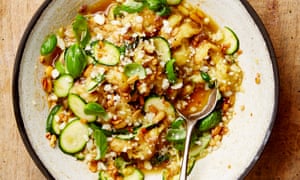
Burnt courgette with anchovies and pine nuts.
Yotam Ottolenghi’s burnt courgette with anchovies and pine nuts: works as a snack, in a meze selection or as a side.

Serve this on bruschetta as part of a meze spread, or alongside slow-roast lamb. Serves four as a meze.

5 courgettes (about 1.2kg in total)
2 anchovy fillets in oil, rinsed, patted dry and finely chopped
2½ tbsp olive oil
Salt
1 garlic clove, peeled and crushed
3 baby courgettes, sliced as thinly as possible on an angle (ideally about 1mm thick, so use a mandoline if you have one)
15g basil leaves, finely shredded
20g pine nuts, lightly crushed
10g parmesan, grated or finely crumbled by hand

Turn the grill to its highest setting. Put the big courgettes on a baking tray lined with foil, then cook them about 10cm below the grill for up to an hour, turning them halfway, until the skins are very crisp and brown. Set aside and, when cool enough to handle, peel off and discard the skin (or cut the courgettes in half and scoop out the flesh). Put the flesh in a colander for half an hour, to drain.

Put the drained courgette flesh in a medium bowl and mix in the anchovies, two tablespoons of oil, a quarter-teaspoon of salt, the garlic, sliced baby courgettes and two-thirds of the basil.

Heat the remaining half-tablespoon of oil in a small frying pan on a medium flame, then toast the pine nuts for two to three minutes, until golden-brown. Tip the nuts and their oil into the courgette mix, stir to combine, then transfer to a shallow serving bowl. Sprinkle with the parmesan and the remaining basil, and serve.
Easy Ottolenghi: 8 main course recipes for autumn

From butternut squash tarte tatin with goat’s cheese to curried fish with leeks and peas, Yotam Ottolenghi has plenty of quick and simple ideas for brightening up your autumnal meals

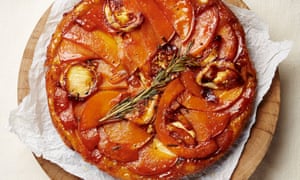
Butternut, goat’s cheese and rosemary tatin

Serve with a crisp green salad in a lemony dressing. Serves eight as a starter, four as a main course.

1 small butternut squash, peeled, ends trimmed
1 tbsp olive oil
1 tsp finely chopped rosemary leaves, plus 1 whole sprig
2 garlic cloves, peeled and crushed
Salt and freshly ground black pepper
45g caster sugar
150g goat’s cheese log (with rind), cut into 1cm-thick discs
350g ready-rolled all-butter puff pastry

Heat the oven to 180C/350F/gas mark 4. Cut the squash in half lengthways, scoop out and discard the seeds, then cut the flesh into 0.5-1cm half-moons and put these in a medium bowl; you should have about 500g in total. Add the oil, chopped rosemary, garlic, half a teaspoon of salt and plenty of pepper, and toss to coat.

Heat a 24cm nonstick, oven-proof frying pan on a medium-high flame. Add the sugar, cook for four to five minutes, until it melts and becomes a semi-dark caramel, then take off the heat (it will keep cooking, so don’t leave it too long). Leave the caramel to cool a little, then lay the sprig of rosemary in its centre. Arrange the squash slices around the rosemary in a circular pattern, working from the outside in and overlapping as much as possible. Dot cheese here and there (you want some underneath the squash, some in between and some on top), and spoon over any rosemary and garlic left in the bowl.

Cut the pastry into a rough 26cm circle and lay it on top of the squash, making sure it covers everything (if need be, use the offcuts to patch up any gaps). Prick all over with a fork and bake for 50 minutes, until the pastry is golden brown and the caramel is bubbling up at the edges. Put a large plate upside down on top of the frying pan, and invert so the tart comes out on to the plate (make sure to protect your hands from the scalding caramel). The squash will now be on top of the tart. If any pieces of squash stick to the pan, just lift them out and put them back in place on the finished tart. Serve warm.

Curried fish with leeks and peas

Curried fish with leeks and peas.
Yotam Ottolenghi’s curried fish with leeks and peas: doubles up as a filling for the ultimate autumnal fish pie.

Pure comfort food, whether you serve it as it is, with a baked potato on the side or topped with mashed potato to turn it into a special fish pie. (If you go for that last option, bake two potatoes, and mash the flesh with butter and milk; tip the fish mix into an ovenproof dish, spread with the mash and bake in a hot oven until crisp on top.) Serves four to six.

500ml whole milk
40g coriander, stalks and leaves separated
2 tsp medium curry powder
3 lemons: shave the zest of 1 into fine strips, finely grate the zest of another and cut the third into wedges, to serve
3 large leeks, finely sliced – keep the white and green parts separate
Salt and black pepper
450g smoked cod fillet, skinned
60g unsalted butter
2 tbsp plain flour
2 tsp black mustard seeds
200g frozen peas
4 eggs, hard-boiled, peeled and quartered

Pour the milk into a large saute pan for which you have a lid, and add the coriander stalks, curry powder, all the lemon zest, the green part of the leeks and a quarter-teaspoon of salt. Bring to a simmer on a medium heat, cook for 10 minutes, then add the fish, cover and poach for five minutes. Using a slotted spoon, transfer the fish to a plate, then flake. Strain the milk into a bowl.

Put half the butter in a medium saucepan with the flour, a third of a teaspoon of salt and plenty of pepper. On a medium heat, stir until the butter melts and the mixture thickens, then slowly pour in the infused milk and cook, still stirring constantly, for three minutes, until the sauce is thick and smooth. Take the bechamel off the heat.

Melt the remaining butter in the same saute pan on a medium-high heat, then fry the white part of the leeks for eight minutes, stirring frequently, until soft and starting to brown. Add the mustard seeds and frozen peas, stir through for two to three minutes, then add the flaked fish, coriander leaves, bechamel and eggs. Stir gently, just to combine, and serve with lemon wedges alongside.

Charred prawn, sweetcorn and tomato salad

Charred prawn, sweetcorn and tomato salad.
Yotam Ottolenghi’s charred prawn, sweetcorn and tomato salad: griddled prawns and veg meet a spicy, Asian-style dressing.

Shelling prawns is a fiddly job, so by all means use peeled ones if you prefer; that said, they won’t have intact tails, which look much better on the plate. Serves four as a starter or two as a main course.

440g shell-on tiger prawns, peeled (leave the tails intact) and deveined (or 240g peeled tiger prawns)
1 tsp olive oil
Salt
1 small red onion, peeled and cut into 1.5cm-wide wedges
100g frozen sweetcorn, defrosted
250g cherry tomatoes
1 tbsp picked marjoram (or oregano)

For the ginger, lime and sriracha dressing
2cm piece fresh ginger, peeled and finely chopped
1 tbsp sriracha
1½ tbsp olive oil
Finely grated zest of 1 lime (1 tsp), plus 1½ tbsp lime juice
¼ tsp caster sugar

In a small bowl, mix the dressing ingredients and an eighth of a teaspoon of salt.

Put a char-grill on a high flame and ventilate the kitchen. While it’s heating up, mix the prawns with the olive oil and an eighth of a teaspoon of salt. Griddle the onion wedges for five minutes, turning them every so often, until charred and cooked, but still with some bite. Transfer to a large bowl, then grill the corn for two minutes, until charred. Add to the onion bowl, then grill the tomatoes for three minutes, turning regularly, so they’re charred all over, and add to the bowl. Griddle the prawns for four minutes, turning them halfway, until charred and cooked through. Add to the bowl with the marjoram and dressing, toss gently, and serve at once.

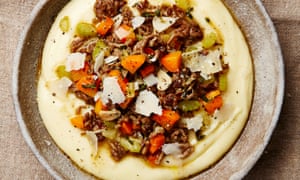
Beef ragout with semolina and parmesan porridge

Beef ragout with semolina and parmesan porridge.
Yotam Ottolenghi’s beef ragout with semolina and parmesan porridge: central heating for body and soul.

Calling any dish an easy midweek supper is a cliche, I know, but that’s exactly what this is; it’s also delicious. You can serve the ragout without the porridge, if you prefer, or with spaghetti, rice or potatoes. If you are making the porridge, and want to get ahead, bear in mind that it will carry on thickening off the heat, so check the consistency before serving: you may need to thin it with a little water. You can also make the ragout ahead of time – just gently reheat. Serves four generously.

45ml olive oil
500g beef mince
Salt and black pepper
1 onion, peeled and roughly chopped
3 sticks celery, roughly chopped
2 carrots, peeled and roughly chopped
3 cloves garlic, peeled and thinly sliced
2 tbsp picked thyme leaves
60ml dry white wine
75ml stock (beef, chicken or vegetable)

For the semolina porridge
600ml whole milk
600ml water
180g semolina
130g parmesan, finely shaved

Heat two tablespoons of oil in a large saute pan on a medium-high flame, then add the mince, three-quarters of a teaspoon of salt and plenty of pepper. Fry for 10 minutes, stirring frequently to break up the mince, until it’s dark golden brown and starting to go crisp. Add the onion, celery, carrots, garlic and thyme and fry for 10 minutes, stirring often, until the vegetables are cooked but still have some bite. Add the wine, cook for a minute until the liquid has evaporated, then add the stock, stir for 30 seconds and take off the heat.

For the porridge, pour the milk and water into a medium saucepan on a medium-high heat. Bring to a simmer, turn down the heat to medium, then add the semolina, three-quarters of a teaspoon of salt and plenty of pepper. Whisk continuously for three to four minutes, until the mixture is smooth and thick, then stir in 100g parmesan and a tablespoon of oil. Divide the porridge between four shallow bowls, top with a generous helping of hot ragout and serve with the remaining parmesan sprinkled over the top.


Lamb and feta meatballs

Lamb and feta meatballs.
Yotam Ottolenghi’s lamb and feta meatballs: just add mash.

Serve as a snack or starter, or bulk it up into a main course with some creamy mashed potatoes and steamed vegetables alongside. The pomegranate molasses are a wonderful addition, but if you don’t have any, the dish will work fine without. Serves six as a starter or snack.

500g minced lamb
100g feta, crumbled into roughly

1cm pieces
2 tbsp picked thyme leaves
2 garlic cloves, peeled and crushed
10g parsley leaves, finely chopped
1 slice white bread, blitzed
½ tsp ground cinnamon
Salt and black pepper
1 tbsp olive oil
2 tsp pomegranate molasses, plus 1 tbsp extra to serve (optional)

Heat the oven to 200C/390F/gas mark 6. Put all the ingredients apart from the oil and pomegranate molasses in a large bowl, add three-quarters of a teaspoon of salt and plenty of pepper, and mix with your hands to combine. Still using your hands, divide the meatball mix into 18 roughly 35g portions and form each into 4cm-wide balls.

Heat the oil in a large frying pan on a medium-high flame, then fry the meatballs (cook them in batches, if need be), for five to six minutes in total, gently turning them throughout, until golden brown all over. Transfer the meatballs to an oven tray lined with baking paper, drizzle pomegranate molasses over the top, if using, and bake for five minutes, to cook through.

Serve hot, with a final tablespoon of pomegranate molasses spooned on top.

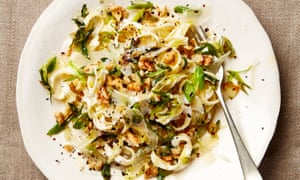
Fresh tagliatelle in yoghurt with spring onion and chilli

Fresh tagliatelle in yoghurt with spring onion and chilli.
Yotam Ottolenghi’s fresh tagliatelle in yoghurt with spring onion and chilli: a one-pot pasta dish that packs a real punch.

I love urfa chilli flakes: they have a big aroma and a mellow kick, so you can be liberal with them, while their deep red colour looks spectacular sprinkled on all sorts. (Ancho chilli flakes have a similar impact, and tend to be more widely available, so use those instead, if need be.) Serves six as a starter, four as a main course.

2 tbsp olive oil, plus 1 extra to serve
6 cloves garlic, peeled and sliced fine
20 spring onions, trimmed and cut on an angle into thin slices
250g greek yoghurt
250g sheep’s yoghurt
1 tbsp lemon juice
Salt
400g fresh tagliatelle
90g walnut halves, roughly chopped
60g pecorino, finely shaved
1 tbsp urfa chilli flakes

Heat two tablespoons of oil in a large saute pan on a medium-high flame, then fry the garlic and spring onion for six to seven minutes, until just starting to brown. Spoon into a bowl.

Tip both yoghurts, the lemon juice, 400ml water and half a teaspoon of salt into the pan (there’s no need to wipe it down first) and put on a medium heat. Warm through for three to four minutes, until the mixture just starts to steam (don’t cook it for any longer, or it will split). Add the pasta, toss to coat and leave to cook slowly for six to seven minutes, until the pasta is cooked and the sauce has thickened.

Divide the pasta between shallow bowls and spoon the garlic and spring onion on top. Sprinkle with walnuts, pecorino and chilli, drizzle over the final tablespoon of oil and serve.

Spiced duck breast with plum and ginger chutney

Spiced duck breast with plum and ginger chutney.
Yotam Ottolenghi’s spiced duck breast with plum and ginger chutney: rich duck + fruity chutney = autumn winner.

Taste the plums first: if they’re very sweet, you may want to reduce the sugar here. This goes very well with a green salad or some rice or potatoes. Serves four.

6 star anise, blitzed to a powder (or 2 tbsp ground star anise)
50g soft dark brown sugar
Flaked sea salt and black pepper
4 duck breasts, skin scored 3mm deep on the diagonal in a crosshatch
1 tbsp sunflower oil
2 red onions, peeled and cut into 1cm-wide wedges
4cm piece fresh ginger, peeled and finely grated
4 plums, cut into 1.5-2cm wedges
1½ tbsp red-wine vinegar
1 tbsp Dijon mustard
10g cress, to serve

Mix two-thirds of the star anise in a small bowl with 15g sugar, a teaspoon and a half of salt and lots of pepper. Rub all over the duck and refrigerate for at least an hour.

Heat the oil in a medium frying pan on a medium-high flame, then fry the onions for 10-12 minutes, stirring, until caramelised and soft. Add the ginger, plums, remaining star anise and a teaspoon of salt, stir for a minute, then add the vinegar, mustard and remaining sugar. Turn the heat to medium-low and cook for 10 minutes, until the fruit is soft and the sauce thick. Take off the heat.

Heat the oven to 220C/425F/gas mark 7. Lay the duck skin side down in a large oven-proof frying pan on a medium-high heat. Fry for five to six minutes, until the skin is caramelised and crisp, then turn and fry for another minute (you won’t need any oil, because of the fat in the duck). Transfer the pan to the hot oven (if the duck releases lots of fat, pour some off first and save it for the next time you roast potatoes) and roast for five minutes (for medium-rare); if you prefer duck a little more done, roast for a few minutes more. Leave to rest for five minutes, then cut each breast widthways into 7mm-thick slices.

While the duck is roasting and resting, gently warm through the chutney, then add any of the juices released when the duck is sliced, to thin it a little. Divide the duck between four plates, spoon the chutney alongside and serve, with cress sprinkled on top.

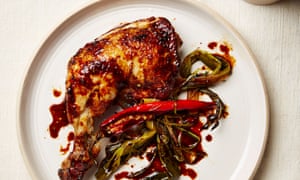
Chicken with miso, ginger and lime

Chicken with miso, ginger and lime.
Yotam Ottolenghi’s chicken with miso, ginger and lime: sweet and sour chicken for grown-ups.

This is lovely served warm from the oven, in which case I’d be tempted to have some sticky or basmati rice alongside, or at room temperature. You can make it a day ahead, in which case keep it in the fridge overnight and take it out half an hour before serving, so it’s not too cold. Serves six.

6 chicken legs, skin scored a few times
2 tsp sunflower oil
Salt
2 tbsp mirin
2 tbsp maple syrup
2 tbsp soy sauce
50g white miso
30g ginger, peeled and finely grated
2 garlic cloves, peeled and crushed
1 lime, juiced, zest cut off thin strips
40g coriander stems, chopped into 6cm-long pieces
2 red chillies, trimmed and cut in half lengthways
8 spring onions, trimmed and cut in half lengthways

Heat the oven to 200C/390F/gas mark 6. Put the chicken in a large bowl with the oil and half a teaspoon of salt, mix together to coat and set aside.

Heat a large frying pan on a medium-high flame, then sear the chicken legs on one side for three to four minutes, until the skin turns golden brown, then turn over, cook for another three to four minutes and transfer to a clean bowl.

Put the mirin, maple syrup, soy, miso, ginger, garlic, lime zest and juice in a large bowl. Whisk to combine, then add the chicken and stir to coat. Tip the chicken into a high-sided, 25cm x 30cm baking dish, cover tightly with foil and bake for 20 minutes. Remove the foil and, using tongs, raise each chicken leg one by one and put some coriander stems, chillies and spring onion underneath, returning each leg to the pan cooked side down. Bake the chicken uncovered for another 30 minutes, turning the legs again halfway through and basting a couple of times. The chicken will by now be golden brown, sticky and tender, and the chillies and spring onions will be soft.

To serve, put a chicken leg on each plate, surround it with the coriander, chilli and spring onion mix, and drizzle over the sauce.

Readers’ recipe swap: Buttermilk

You’ve used this old-school cooking ingredient to create complex layers of flavour in spiced cakes, savoury dressings and rolls, and a fudgy treat... Our next theme is till open: ANCHOVIES! Find out how at the bottom of this article...

grew up with my head in prairie kitchens, reading Laura Ingalls Wilder and wishing I could make snow candy, mix lemonade in a barrel and drink fresh buttermilk – just like Laura and Carrie in the Little House books do when Ma churns cream, dyed yellow with carrot, into butter. I never made butter with my mother, but buttermilk, it made perfect sense to me, was the milk from making butter: the watery liquid that separates from the fat in the churning and tastes subtly of both milk and butter. I take any chance to make it myself - nothing beats homemade butter, and there’s no other way to get that liquid, a wonderful thing to bake with. But what making butter does not give you is the unpalatably tart, watered-down-yoghurt-type stuff you buy in cartons for making pancakes.

Why the confusion? Well, a 2012 Slate piece on the subject – by LV Anderson, for whom Ingall’s Little House in the Big Woods was clearly as formative a culinary read as it was for me – explains that it’s because “buttermilk” describes not one but two other dairy products. One is the old, soured milk most butter was made from before fridges – the milk for butter, if you will. The second is the cultured sour milk commercial dairies began to make from low-fat milk and lactic acid – no butter involved – in the 1920s, marketed primarily for health and slenderness, and the acid needed when baking with bicarb.

Whichever buttermilk you do use though, you definitely want to bake with it, as your recipes here prove. It gives a smooth, rich crumb; counters overt sweetness and, much like lemon, enhances saltiness; and it’ll marinade anything into tender bitefuls.

The winning recipe: Spiced buttermilk cakes

Everyone’s eyes lit up when I brought these out at a makeshift picnic on Friday night. They paired as well with hot chocolate as they did with a sharp goat’s cheese. Crunchy with sugar, and rich in unexpected fruit, DetoutcoeurLimousin’s scone-rock-cake hybrids are a delight.

Makes 12
300g plain white flour
2 tsp baking powder
2 tsp quatre epices (or mixed spice)
A pinch of salt
125g butter
90g sugar, plus extra for sprinkling
150g chopped dried fruit (sultanas, apricots, cherries, blueberries)
1 egg
125ml buttermilk

1 Preheat the oven to 200C/400F/gas mark 6 and grease/line a couple of baking sheets. Sieve the flour, baking powder, spices and salt into a large mixing bowl.

2 Cut the butter into small chunks and rub into the flour mix until it resembles breadcrumbs, then stir in the sugar and dried fruit. Lightly beat the egg with the buttermilk before adding it to the dry ingredients. Be careful not to over-mix – it’s ready as soon as everything comes together.

4 Put tablespoons of the mixture on to the prepared baking tray, leaving some room for them to spread. Bake for 15‑20 minutes, or until they are a light golden brown. Remove from the oven and transfer to a cooling rack. Sprinkle with sugar before serving.

Buttermilk dressing

Fadime Tiskaya uses the actual buttermaking byproduct here in a toothsome dressing for a split wheat salad. I drenched roast buttersquash and pulses with it, to excellent effect. Traditionally, Kurdish butter, Tiskaya explains, is made from yoghurt, much like Indian makhan – which, as my 80 minutes whisking yoghurt into froth made painfully clear, is only possible when your yoghurt is made with raw whole milk straight from a cow. The pasteurised stuff we can buy simply doesn’t have the requisite fat content – so do your arms a favour and make butter with double cream instead.

Makes 1 large cupful
250g buttermilk
50g plain yoghurt
2-3 tbsp lemon juice
2 garlic cloves, finely crushed
2 tsp dried mint
1½ tsp dried thyme
2 tbsp fresh mint leaves, finely chopped
Salt and black pepper

1 Whisk all the ingredients together in a mixing bowl.

Walnut, honey and rosemary buttermilk rolls

Lauren Kisby uses the buttermilk here to soften both the nuts and the crumb of her bake.

Lauren Kisby’s walnut, honey and rosemary buttermilk rolls
Lauren Kisby’s walnut, honey and rosemary buttermilk rolls. Photograph: Lauren Kisby/GuardianWitness

Makes 8-12
50g walnuts, finely chopped
280ml buttermilk
500g strong white bread flour
1 tsp salt
7g (1 sachet) fast-action yeast
4 big sprigs rosemary, leaves removed and finely chopped
2 tbsp honey
3 tbsp butter, melted
1 egg

1 Soak the walnuts in 2 tbsp of the buttermilk, cover and refrigerate (ideally overnight) in a small bowl .

2 Put 250g of the flour into a large mixing bowl. Add the salt, yeast and rosemary and stir well to combine.

3 In a small pan, heat the remaining buttermilk until just warm, then remove from the heat and whisk in the honey, 2 tbsp of the butter and the egg. Add the buttermilk mixture to the flour mixture and combine to make a thick, stiff batter. Add the remaining flour until a soft dough is formed. Don’t worry if it looks a little dry.

4 Retrieve the buttermilk-soaked walnuts from the fridge, add to the dough and knead on a floured surface until it is no longer dry and forms a soft ball. Continue to knead for 5 minutes. Add more flour if it becomes too sticky.

5 Split the dough into 12 pieces. For the tear-and-share style roll, form into 12 balls and arrange in a 22cm wide, well-oiled baking tin. Brush with a little of the remaining melted butter, cover and leave somewhere warm to prove for an hour, or until doubled in size.

6 Set the oven to 190C/375F/gas mark 5, brush with the remaining melted butter and bake for 20 minutes, or until golden brown and cooked through.

Buttermilk fudge

Buttermilk, rather than the conventional cream or condensed milk, lends this toothachingly sweet treat a sourness as welcome as that hit of sea salt. This might just be my new favourite fudge, Rachel Kelly.

Makes 16-20 squares
350g demerara sugar
240ml buttermilk
4 tbsp golden syrup
¼-½ tsp sea salt flakes
110g butter, cubed
1 tsp vanilla extract

1 Line a baking tin (23 x 23cm) with greaseproof paper.

2 Combine the sugar, buttermilk, golden syrup, salt and butter in a medium saucepan. Warm over a medium heat, stirring occasionally until the butter and sugar have melted – about 2-3 minutes. Then gently simmer for about 10-15 minutes, stirring continuously, until a sugar thermometer reads 116C/240F.

3 Remove from the heat, add the vanilla extract and beat well (by hand or with an electric beater) until it has thickened and is a pale golden brown – it will smell of toffee and have a grainy, slightly crystallised texture. Scrape into the lined baking tin. Set aside to firm up for a couple of hours. Cut into squares and store in an airtight container in a cool place.

Chocolate orange buttermilk brioche loaf

A silken breakfast slice from ColonialCravings, just the right side of sweet, and pleasingly aromatic.

Makes 1 small loaf
250g strong white bread flour, plus more for dusting
¼ tsp salt
1 tbsp sugar
A pinch of ground cinnamon (optional)
2 tsp dried yeast (about 1 sachet)
Zest of 1 very large orange
70g dark chocolate chips
2 eggs
75ml buttermilk
50g butter, melted

1 Whisk together the flour, salt, sugar, cinnamon, yeast and orange zest. Stir through the chocolate chips.

2 In a separate bowl or jug, beat together the eggs and buttermilk. Set aside 2 tbsp of this for glazing the brioche. Add the melted butter to the remaining egg mixture.

3 Pour the wet ingredients into the dry mixture and mix it together with a butter knife, to obtain a nice soft dough. Turn this out on to a lightly floured work surface and knead for a few minutes, until springy. Wash the bowl and lightly oil it. Put the dough in the bowl before covering it with oiled clingfilm. Set aside somewhere warm for one hour, or until doubled in size. Lightly brush a small loaf pan with a little oil.

4 Once risen (it should be quite soft and spongy), turn the dough out and knead briefly. Shape into a loaf, put in your loaf tin, and re-cover with the clingfilm. Leave to rise for another hour. Then preheat the oven to 220C/425F/gas mark 7.

5 Once risen, remove the clingfilm, brush with a little of the reserved egg wash and bake for about 15 minutes, until golden brown. Leave to cool a little on a wire rack before removing from the tin.

Buttermilk oregano chicken wings

As any good platter of southern fried chicken will prove, buttermilk as a marinade tenderises chicken with unbridled gusto – and the longer you leave it before cooking, the better. Justine Wall’s use of oregano here is inspired.

Serves 4-6
1kg chicken wings
360ml buttermilk
1 tbsp dried oregano
1 tsp sea salt
Black pepper
1 garlic clove, grated finely
A handful of fresh parsley, chopped
Zest and juice of ½ a lemon

For the sauce
30g salted butter
Small handful parsley, chopped

1 Combine the buttermilk, oregano, salt, pepper, garlic, parsley, zest and juice of the lemon in a bowl. Massage the marinade into the meat. Cover with clingfilm and refrigerate overnight.

2 When ready to roast, preheat the oven to 180C/350F/gas mark 4 and allow the wings to come up to room temperature. Put the wings with all of the marinade in a medium-size ovenproof dish – they should fit snugly – and roast for 45 minutes. If using a fan oven, cover with foil for the first 20 minutes, so they don’t dry out.

3 Turn the wings regularly so that they brown evenly. Once cooked, remove the wings and keep warm. Scrape the remaining marinade into a small saucepan, and add the salted butter. Bring to the boil, and then turn the heat down and simmer for 20 minutes, whisking every now and then, to reduce to a sauce consistency.

4 To serve, stir in the chopped parsley and pour the sauce over the wings.


Take part in our next theme, ANCHOVIES!
Upload your ideas: theguardian.com/witness;
Send them by email
: recipes@theguardian.com; or
Instagram @guardian_cook

by noon on Wednesday 28 September. Selected recipes will appear in Cook and online on 8 October.

Yotam Ottolenghi’s grape recipes

Grapes every which way: in a burrata and basil salad, with chicken and fennel, and in a boozy, pomegranate-scented granita

I am often asked if I think food is a tool for peace. I am asked this because I, a Jew born and raised in Jerusalem, set up a restaurant business with Sami Tamimi, a Palestinian born and raised in the same city.

In our cookbook Jerusalem, Sami and I look into how central hummus is to both our cultures, and how debates about ownership of that dish and its heritage have often fuelled the political argument. But I would argue that food (hummus or otherwise) has just as much power to bring people together as it does to force them apart. While it would be flippant to suggest that hummus per se is a tool for peace, there is something very real about the act of bringing people together around a table to eat, whatever their differences: the very act of cooking and sharing food is a unifying one. It’s certainly a good place to start, if nothing else.

To mark the 30th anniversary of the UN’s International Day Of Peace earlier this week, International Alert, a leading peace-building organisation, is currently holding its third annual Talking Peace festival. As part of the event, which runs until 2 October, they’ve set up the Conflict Cafe on London’s South Bank, which will serve food from Lebanon to begin with and later from Sri Lanka. The doors are now open and the communal tables are all set up, so do pop along if you can, to share some food in support of peace.

When I was putting together this week’s grape-based recipes, the sight of John Steinbeck’s The Grapes Of Wrath on my bookshelves made me smile. The link may seem a little tenuous, not least because those forced from their land in the 1939 novel are economic rather than political migrants, but the synchronicity between then and now is clear, in my mind, at least. Today’s dishes could have been united by anything, really (chickpeas, grapes, aubergines) because what you’re eating matters less than the act of sharing food, which really does matter. It’s not the only tool for peace, true, but it is a step in the right direction.

Burrata with chargrilled grapes and basil

If you can’t get hold of burrata, use buffalo mozzarella instead. This is enough to serve six as a generous first course, or as a light lunch with some crusty bread to mop up the dressing.

300g seedless red grapes
2 tbsp valdespino (or other top-quality sherry) vinegar
3 tbsp olive oil
1 garlic clove, peeled and crushed
1½ tsp soft dark brown sugar
1½ tsp fennel seeds, toasted and lightly crushed
Flaky sea salt and black pepper
12 18cm-long wooden skewers
3 balls burrata (or buffalo mozzarella; 600g net weight)
6 small sprigs red or green basil, to serve

Put the grapes in a medium bowl with the vinegar, oil, garlic, sugar, a teaspoon of fennel seeds, a quarter-teaspoon of salt and plenty of black pepper. Using your hands, toss to coat, then set aside to marinate for half an hour (or even longer, especially if you want to prepare the grapes ahead of time). Skewer six or seven grapes on to each stick, and reserve the marinade – you’ll need it for serving.

Put a ridged griddle pan on a high heat and ventilate your kitchen. Once the pan is good and hot, grill the grape skewers in batches for two to three minutes in total, turning them over halfway through. Remove from the heat and keep warm while you griddle the remaining skewers.

To serve, tear each ball of burrata in two and put one half on each of six plates. Arrange two grape skewers per portion, so they’re leaning against half-cheeses, then spoon a teaspoon and a half of the reserved marinade over each portion. Sprinkle over the remaining fennel seeds, garnish each plate with a sprig of basil and serve.

Grilled chicken with muscat grapes and fennel

Yotam Ottolenghi’s grilled chicken with muscat grapes and fennel.
Yotam Ottolenghi’s grilled chicken with muscat grapes and fennel. Photograph: Louise Hagger for the Guardian. Food styling: Emily Kydd. Prop styling: Jennifer Kay

Muscat grapes are particularly sweet and floral, but other red grapes will work here just as well. Use a mandoline, if you have one, to slice the onion and fennel, because you want them really thin for this dish. Serves four as a main course.

4 skinless chicken breasts (500g)
3 tbsp olive oil
1 tbsp rosemary leaves, finely chopped
1½ tbsp thyme leaves, finely chopped
Salt and black pepper
1 tbsp caster sugar
60ml red-wine vinegar
1 cinnamon stick
2 tsp sumac
¼ tsp black peppercorns, crushed
150g muscat grapes (or seedless red grapes)
80g red onion, peeled and sliced into 1-2mm-thick rounds
2-3 small fennel bulbs, trimmed and sliced 1-2mm thick
2 tsp fennel seeds, toasted and lightly crushed
20g basil leaves, torn
10g tarragon leaves

In a bowl, combine the chicken with a tablespoon of oil, the rosemary, thyme, half a teaspoon of salt and plenty of pepper, then refrigerate for an hour.

Heat the oven to 220C/425F/gas mark 7. Heat a large frying pan on a medium-high flame, then fry the chicken breasts for five minutes, turning them once halfway through, until golden brown. Transfer the chicken to a small baking tray and roast for 10 minutes, until cooked through. Once the chicken is cool enough to handle, tear it into roughly 4cm pieces and put it in a bowl. (If you’re not serving up any time soon, cover and refrigerate the cooked chicken at this stage; take it out of the fridge 30 minutes before using.)

Put the sugar, vinegar, cinnamon, a teaspoon of sumac, a quarter-teaspoon of salt and some pepper in a small saucepan and place on a high heat for a minute or two, until the sugar has dissolved. Tip this into a medium bowl with the grapes and red onion, and leave to marinade for 30 minutes, stirring from time to time.

To serve, pour the grape mix over the chicken and toss to combine. In a small bowl, mix the fennel, fennel seeds, basil and tarragon with the remaining two tablespoons of oil and another quarter-teaspoon of salt, then add to the chicken bowl and give everything a very gentle final stir. Serve on a platter, with the final teaspoon of sumac sprinkled on top.

Grape and pomegranate granita with vodka and mint

Make this a day ahead. If you fancy intensifying the booziness of the granita, put a bottle of vodka in the freezer an hour before serving, then drizzle a little over the top of each portion as you serve it – you’ll have to do this at the table, because the vodka will melt the granita. Serves four, generously.

100g caster sugar
100ml water
3 large sprigs fresh mint, plus 4 small sprigs, to serve
700g black (or as dark as you can get) seedless grapes
100ml good-quality pomegranate juice
50ml vodka (or gin)
60g pomegranate seeds (ie, the seeds from ½ small pomegranate)

Put the sugar and water in a small saucepan on a high heat. Once the sugar has dissolved, add the larger mint sprigs and boil for a minute. Turn off the heat, leave to infuse and discard the mint sprigs when cool. Pour the syrup into a large bowl.

Put the grapes in a food processor and blitz, skin and all, until very finely chopped. Put a large sieve over the sugar syrup bowl, and pass the grape mixture through it, so the juice drops into the syrup; discard the skin debris. Add the pomegranate juice and vodka to the bowl, stir to combine, then pour into a plastic freezerproof container for which you have a lid.

Freeze uncovered for two hours, then use a fork to scrape any frozen crystals from the sides of the container into the centre, and stir to intersperse into the unfrozen liquid. Return to the freezer and repeat this scraping and stirring every two hours, until the liquid is completely frozen and crystallised – this should take about eight hours in total, and the mix will resemble snow. Cover and freeze overnight.

Five minutes before serving, take the granita out of the freezer and stir with a fork to separate the crystals. Spoon into four bowls or glasses, sprinkle with the pomegranate seeds and perhaps a little extra vodka, top each portion with a small mint sprig and serve immediately.

  • Read 28 pages of exclusive autumn recipes in Easy Ottolenghi, only with the Guardian this Saturday. Click here for £2 off the weekend papers

Anna Jones’ quick and easy vegetable traybake recipes

Lighten the load with a one-tray bake. Try a mound of creamy ricotta atop a tray of veg, figs and almonds, then experiment with our six steps to creating your own feast...

I am learning a new way to cook. Since having my little boy, it’s been hard to find time. No more long evenings in the kitchen: for now, my cooking is sandwiched into a neat window of time before baths and stories. I’ve rediscovered the joy of one pan or one-pot meals – dinners laid thoughtfully into a tray and left to roast and burnish. Cooking this way takes a quick, but careful, bit of preparation and can then be almost left alone for edges to crisp and golden hues to appear.

It requires being practical and organised. Although I am neither, I do find this kind of cooking weirdly satisfying. While I love the feeling of a pan over a flame, there is something very pleasing about knowing your dinner is cooking while you sit down with a glass of something, fold up the washing, catch up on emails, or whatever it may be.

Though the method may be simple, I still want flavours and textures that excite me, as well as bringing some balance – after all, I want everything I’m going to eat to be in that tray – vegetables, herbs, pulses, even baked cheeses. I’ve been playing around with one this week that reflects the season, and it’s become my quick weeknight take on a faded classic.

This principle of a roasting tray dinner works well with almost anything. I work on a basic formula of one or two vegetables, a herb, an accent flavour, such as chilli or lemon, and then something hearty – a pulse or some torn-up bread. Bear in mind that you need a vegetable that softens when it cooks – such as sweet potato or courgette – to add a little stickiness and to stop things burning. If you are roasting something (such as potatoes) that won’t do that, you might want to add a little stock or wine to make sure everything cooks evenly and so the flavours mingle in the best way possible.

Quick courgette ratatouille with crispy haricot beans

I’m not sure if it’s just me, but it seems that ratatouille got left behind in the 90s – but it’s a great dish that deserves reviving. This is my quick version – the ideal thing to make on a weeknight. I use the grill to get things working quickly and to impart some crispy edges and charred flavour.

Ingredients for a quick courgette ratatouille with crispy haricot beans tray bake
‘I cook the onions in a frying pan to make the best use of time, but if you’d rather grill them before the courgettes, please do.’ Photograph: Issy Croker for the Guardian

Serves 4
4 medium courgettes, grated
Olive oil
Salt and black pepper
1 red onion, thinly sliced
½ bunch of fresh thyme, leaves picked
1 red pepper, finely chopped
230g jar of roasted red peppers, finely chopped
550g cherry tomatoes, finely chopped
2 garlic cloves, finely sliced
400g tin chickpeas, drained
Zest and juice of 1 lemon

1 Preheat your grill to high. Scatter the grated courgettes evenly over a baking tray, season with salt and pepper and drizzle with a little oil. Put the tray under the grill to cook and char the courgettes for about 20 minutes, turning every couple of minutes.

2 Meanwhile, put a frying pan on a medium heat. Add the red onion to the pan with a splash of olive oil and the thyme leaves. Cook for 5 minutes, or until soft and sweet.

3 When the onions are nicely browned, add them to the tray of courgettes along with all of the chopped peppers, as well as the tomatoes and garlic, then continue to cook and brown, turning every 5 minutes, for a further 10–15 minutes.

4 Put the frying pan back on a high heat and add a little more olive oil. Add the chickpeas, a good pinch of salt and pepper, and the zest of the lemon. Cook until the chickpeas have become crisp around the edges. This will take about 10 minutes, and you’ll need to keep tossing them around the pan.

5 Once the courgette mixture has turned soft and sweet, and become charred in places, scatter over the chickpeas. Serve with some green leaves dressed with lemon juice.

Figs, butterbeans, ricotta, radicchio, almonds (main picture)

If you can, use good Italian or strained ricotta here; if you can’t find any, you can improve a particularly soggy ricotta by straining your own, but it takes a few hours. Jarred beans are harder to find, but I think they taste better than the tinned type.

Serves 4
200g ricotta
400g tin or jar of butterbeans
4 figs, tough stems removed, quartered
1 lemon
Small bunch of thyme or oregano, leaves picked
A pinch of dried red chilli flakes
Salt and black pepper
Extra virgin olive oil
1 red chilli, finely chopped
100g almonds, skin on
1-2 heads of radicchio, shredded

1 If your ricotta is very wet, put it in a small sieve lined with muslin over a bowl in the fridge for a few hours. You will probably get a couple of tablespoons of liquid in the bowl, which you can discard.

2 Set the oven to 200C/400F/gas mark 6 and get a large, lipped roasting tray. Scatter the beans into the tray, making a little space in the middle for the ricotta, then turn out the cheese into it.

3 Scatter the quartered figs on top of the beans. Grate the zest of the lemon all over the tray, focusing particularly on the ricotta. Sprinkle over some of the thyme leaves and red chilli flakes along with some salt and pepper. Drizzle a little olive oil over the figs and beans. Put in the hot oven for 45 minutes, or until the ricotta has shrunk a little and is beginning to brown, and the beans have softened and their skins crisped.

4 Meanwhile, make your herb oil: bash the rest of the thyme tips in a pestle and mortar until you have a deep green paste, add 4 tbsp olive oil, the chopped fresh chilli and a good sprinkle of salt and pepper.

5 When your traybake has had 35 minutes, put the almonds on to a separate tray with a good pinch of salt and pepper, then roast for the last 10 minutes of the cooking time.

6 Remove both the traybake and the almonds from the oven, roughly chop the almonds and sprinkle them over the bake with the shredded radicchio. Drizzle over the herb oil and serve in the middle of the table for everyone to dig in. A side of some sauteed spinach or green beans might be nice.

Six steps to making roasting tray dinners

Pick 1 item from each section, throw them together in a deep, A4-sized baking tray. Bake for 30-55 minutes at 200C/400F/gas mark 4 until the vegetables are soft and golden.

1 Main vegetable
4 courgettes, cut into thick coins
1 roughly chopped butternut squash
800g winter roots, chopped into about 1cm pieces

2 Soft vegetable
200g Spinach
1⁄2 a jar of roasted red peppers, roughly chopped
2 leeks, shredded

3 Hearty add-on
400g tin of butterbeans, drained
400g tin of chickpeas,drained
2 slices of good bread, torn

4 Liquid
100ml veg stock
100ml white wine

5 Herb
A small bunch of basil
A small bunch of thyme
A bunch of sage, thyme or rosemary

6 Flavour boost
The zest of one lemon
A teaspoon of hot smoked paprika
The zest of one orange

  • Anna Jones is a chef, writer and author of A Modern Way to Eat and A Modern Way to Cook (Fourth Estate); annajones.co.uk;@we_are_food

Nigel Slater’s potatoes and peppers recipe

A delicious pairing, all cooked up in a single pan

The recipe

Slice 3 long, romano peppers in half from shoulder to tip. Cut a fat orange bell pepper into quarters and remove the seeds and any white core. Peel and squash flat 4 plump cloves of garlic. Wash and thinly slice 700g of small to medium-sized potatoes.

Prep done, warm 8 tbsp of olive oil in a large frying pan or flame-proof casserole and add the romano and bell peppers, letting them cook over a moderate heat for 5 minutes, covered with a lid, until they start to relax. Turn them from time to time, so they cook evenly. Remove the peppers to a plate, leaving the oil intact, and set aside.

Add the garlic to the pan and then the potatoes, cooking them in one layer if possible. When they are golden on the underside, turn over and lightly colour the other side. Return the peppers to the pan, season with salt and pepper, mix the ingredients together then pour over 300ml of chicken or vegetable stock and bring to the boil.

Lower the heat and leave the peppers, potatoes and stock to simmer, partially covered by a lid. After 8 minutes or so, check the potatoes for softness: they should be tender and easy to crush. Turn and cook the other side. Continue cooking until all is golden and soft, the potatoes are a little broken up and there is a good layer of sweet, garlic-scented juice. Chop 3 spring onions and scatter them in at the last minute, letting them briefly soften before serving. Serves 2.

The trick

Give the peppers plenty of time to soften and sweeten. The caramelised juices are integral to the dish. Keeping the ingredients covered as they cook is crucial so they partly fry, partly steam. The peppers should be soft and silky before you remove them from the pan.

The twist

Try sweet potatoes. The cooking time needs to be lessened somewhat, and the potatoes crumble more, but their sweetness is a thoroughly good thing with which to accompany a roast.

Email Nigel at nigel.slater@observer.co.uk or follow him on Twitter @NigelSlater

20 best autumn recipes: part 1

From baked squash to a classic blackberry and apple pie, Observer Food Monthly’s selection of the pick of the season • 20 best autumn recipes: part 2

Richard Olney’s pears in red wine (poires au vin rouge)

Serves 4
eating pears 4 or 5, slightly under ripe
orange 1
cinnamon
sugar 150g
good red wine 1 bottle

Cut the pears in two, lengthwise, core and peel them and arrange the halves in the bottom of an earthenware or enamelled ironware terrine – if they are to be cooked in the oven, Pyrex or porcelain will do as well. Wash the orange to remove any hint of insecticide or preservative, and shave a long spiral from the peel, keeping clear of the white, pithy material. Add it to the pears, sprinkle very lightly with cinnamon, add the sugar and the wine, bring to a boil, and leave, covered, to simmer for about 2 hours (with certain hard varieties of cooking pears, one may allow as much as 6 to 8 hours’ cooking time), or until they are coated in a thin syrup. Serve them chilled, accompanied by tuiles or other simple cookies.
From The French Menu Cookbook by Richard Olney (Collins, £14.99). Click here to order a copy from the Guardian Bookshop for £12.29

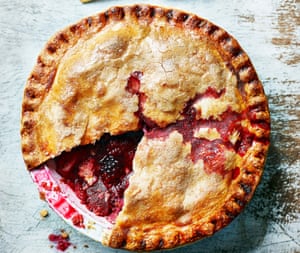
Jane Grigson’s blackberry and apple pie

Blackberry and apple pie
Blackberry and apple pie: ‘When you gather windfall apples to make this pie, quantity and variety of fruit do not much come into it’. Photograph: Martin Poole for the Observer

When you pick blackberries in the autumn, and gather windfall apples to make this pie, quantity and variety of fruit do not much come into it. You make the best of what you have. This is the way it should be. This is how regional dishes once developed. People used what their garden and neighbourhood could provide. Sometimes a suggestion from a visitor or the arrival of a new ingredient with the development of trade and manufacture might give a new aspect to an old dish, with luck a new refinement, most likely – at least, in recent times – a short cut or substitute ingredient that did not improve it. I cannot help feeling that before the great bramley conquest – it was introduced in 1876 – blackberry and apple pie made with the windfalls of pippin or reinette varieties tasted much better. Nowadays, I use tart windfall Blenheim orange apples, and then after Christmas Belle de Boskoop. This is a real treat as we do not grow it in Wiltshire, and depend on the kindness of January visitors from France for an occasional supply.

With apples of this quality, you do not need so many blackberries (cookery books often give equal weights of each). If you are making the pie soon after picking blackberries, rather than from a store in the freezer, weigh them and add up to double their weight in apples.

Assuming you start with 1kg apples and ½kg of blackberries, put half the blackberries into a large saucepan. Peel, core and slice the apples, sprinkling them with lemon or orange juice to prevent them darkening: put the peel and cores into the blackberry pan and cover with water. Cook slowly at first, then faster as the juices run, so that you end up with about 150ml of strained liquid. Dissolve 200-250g sugar in the liquid, the quantity according to the tartness of the fruit.

Pack the sliced apples and remaining blackberries in layers in a deep pie dish. Mound up the fruit in a curve above the rim of the dish. Pour the sweetened, cool juice over the whole thing. Cover in the usual way with shortcrust pastry. Brush over the top with egg white and sprinkle with caster sugar.

Put into the oven at 200C/gas mark 6 for 45-60 minutes depending on the depth of the dish. Turn the heat down slightly once the pastry is set firm and lightly coloured. Protect it with butter papers from becoming too brown. Test the apples with a thin pointed knife through the central hole in the pastry: when it goes through them easily, they are done. Serve with custard sauce or cream, preferably cream, clotted cream above all.
From Jane Grigson’s Fruit Book by Jane Grigson (Penguin, £12.99). Click here to order a copy from the Guardian Bookshop for £12.99

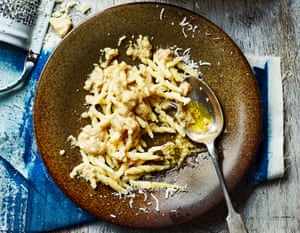
Anna Del Conte’s trofie with walnut sauce (trofie in salsa di noci)

Trofie with walnut sauce
Trofie with walnut sauce: a Ligurian speciality. Photograph: Martin Poole for the Observer

This sauce from Liguria is traditionally used with pansoti or corzetti, local pasta shapes made with a simple dough of flour and water. Pansoti are the Ligurian ravioli, filled with wild herbs, beet leaves, borage and ricotta.

Corzetti come in two shapes: in one, the rolled-out dough is cut in the shape of a figure of eight; in the other, a far rarer shape, the dough is cut in the shape of large coins and each coin is stamped with a special wooden tool carved with a pattern. In the old days, aristocratic families had their own stamp with the coat of arms on it. Corzetti are rarely found on the market, but another Ligurian pasta shape, trofie, can be used; these are more widely available from supermarkets.

As for the walnuts, they should be fresh-looking with no dark spots and in large pieces, showing no sign of powder. Of all nuts, walnuts are the ones that most quickly turn rancid and they become unpleasantly acid when old.

Serves 4
walnuts 100g, shelled
one-day-old crustless bread 30g
whole milk 3-4 tbsp
garlic 1 clove
extra virgin olive oil 100ml
double cream 2 tbsp
parmesan cheese 50g, grated, plus extra to serve
salt and freshly ground black pepper
trofie 350g

Soak the walnuts in boiling water for about 15 minutes and then drain and remove as much of the skin as you can. Preheat the oven to 120C/gas mark ½.

Break the bread into small pieces, put it in a bowl and pour over the milk. Leave it for a few minutes and then squeeze out the milk and put the bread in a food processor together with the walnuts and the garlic. Blitz while adding the oil through the funnel. Transfer the mixture to a serving bowl and mix in the cream and the parmesan. Taste and season with salt and a little pepper. Place the bowl in the oven.

Cook the trofie in boiling salted water. Drain, reserving some of the water, and turn it into the bowl with the sauce. Add a little of the reserved pasta water to loosen the sauce, mix well and serve at once with a bowl of grated parmesan.
From Anna Del Conte on Pasta by Anna Del Conte (Pavilion, £18.99). Click here to order a copy from the Guardian Bookshop for £16.40

Simon Hopkinson’s cep tarts

Cep tarts
Cep tarts: perfect for a light luncheon with a rocket salad and some thin slivers of parmesan. Photograph: Martin Poole for the Observer

Persillade basically means chopped garlic and parsley. It is a classic of Provençal cookery and is added to many sautéed dishes at the last minute, together with a few breadcrumbs to soak up any excess olive oil or butter. When added to fried ceps, they become cèpes à la provençale and if you are not wishing to bother with the pastry, then this dish is wonderful just as it is.

If you are lucky enough, like me, to have been foraging for fresh ceps in Welsh forests, then these are the mushrooms to use for this dish. Obviously, these are not readily available in the shops! So, as an alternative, I would suggest either a combination of dried or tinned ceps (which are readily available in specialist food shops and some supermarkets) with large, black, flat mushrooms. Dried mushrooms are best because they have a much stronger flavour, and are easy to reconstitute.

This would be perfect for a light luncheon with a rocket salad and some thin slivers of parmesan.

Serves 4
fresh ceps 450g or dried ceps 110g
flat mushrooms 225g
butter 110g
salt and pepper
flat-leaf parsley 1 bunch, leaves only
garlic 4 cloves, peeled and chopped
dry breadcrumbs 50g
lemon grated rind of 1
egg 1, beaten
parmesan cheese 2 tbsp, freshly grated

For the pastry
strong plain flour 225g
salt a pinch
unsalted butter 225g, cold, cut into small pieces
lemon juice of ½
iced water 150ml

Begin by making the pastry, preferably the day before; certainly several hours in advance. Sift the flour and salt together into a bowl and add the butter. Loosely mix, but don’t blend the two together in the normal way of pastry making. Mix the lemon juice with the iced water and pour into the butter/flour mixture. With a metal spoon, gently mix together until you have formed a cohesive mass. Turn on to a cool surface and shape into a thick rectangle. Flour the work surface and gently roll the pastry into a rectangle measuring about 18cm x 10cm. Fold one third of the rectangle over towards the centre and fold the remaining third over that. Lightly press together and rest the pastry in the fridge for 10 minutes.

Return the pastry to the same position on the work surface and turn it through 90 degrees. Roll it out to the same dimensions as before, and fold and rest again in the same way. Repeat this turning, rolling, folding and resting process three more times. (Phew! This is the moment when you wish you’d bought ready-made pastry.) Place the pastry in a polythene bag and leave in the fridge for several hours or overnight.

If you are using dried ceps, cover with lukewarm water and leave to reconstitute for 20 minutes. Drain and gently squeeze dry with your hands. (Strain the soaking water and use it to make a soup or stock.)

Preheat the oven to 200C/gas mark 6. Roll out the pastry into four circles measuring about 15cm across and 3mm thick. Place on a floured tray and keep cool in the fridge.

Slice the mushrooms thinly. Heat the butter in a large frying pan until just turning golden. Throw in the mushrooms and season with salt and pepper. Cook briskly until crusty and golden brown, driving off any moisture that builds up. Add the parsley, garlic, breadcrumbs and lemon rind and mix thoroughly. Turn into a bowl and leave to cool. Remove the pastry circles from the fridge, brush the edges with beaten egg to a depth of 1 cm and spread the mushroom mixture over the four circles up to the edge of the beaten egg. Sprinkle with the grated parmesan and put on to greased baking sheets. Bake in the oven for 15-20 minutes or until the pastry has risen around the edges and is thoroughly crisp underneath (check by lifting with a palette knife). Serve piping hot.
From Roast Chicken and Other Stories by Simon Hopkinson (Ebury, £16.99). Click here to order a copy from the Guardian Bookshop for £24.60

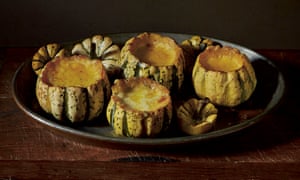
Jane Scotter and Harry Astley’s baked squash with celery and herb cream

Baked squash with celery and herb cream
Baked squash with celery and herb cream: ‘sweet dumpling – a very pretty striped and dimpled squash – is ideal for this’. Photograph: Tessa Traeger

This recipe was devised on one of the rare occasions that we had a major power cut, with three young children needing to be fed and only the wood burner for warmth and cooking. We wrapped the squash in foil and tucked them into the edges of the wood burner, away from the flames. The children dipped cubes of bread into the cheesy, fondue-style filling. It became a popular supper dish in less chaotic times, too.

Our favourite squashes to use for this recipe are uchiki kuri (also known as onion squash), buttercup and blue ballet. All have dense, strongly flavoured flesh that soaks up flavours and fat without becoming mushy and marrow-like. The skin of the squash retains its beautiful, vibrant colour and is thin enough not to need peeling. We think it is the best part.

You can also serve this dish as a starter, using individual smaller squashes. The photo shows sweet dumpling – a very pretty striped and dimpled squash that is ideal for this.

Serves 2 hungry people
squash 1, about 1-2kg
creme fraiche about 300ml (you need enough to fill the squash by ¾)
lemon juice of ½
celery leaves 3 sprigs, or 1 lovage leaf
rosemary, thyme or sage 2 sprigs
butter 1 knob
garlic 1 clove, finely chopped
nutmeg a little, grated, or ½ cinnamon stick
good melting cheese, such as comte, gruyere or cheddar 150g, grated
sea salt and black pepper

To garnish (optional)
olive oil 3 tbsp
sage 4-5 leaves

Heat the oven to 200C/gas mark 6. Cut the top off the squash to make a lid and set aside. Scoop out the seeds and a little of the flesh so that you are left with a clean squash bowl. To stop the squash toppling over, it is a good idea to make a base for it to sit on: take a roughly 30cm square piece of foil, squeeze it together and shape it into a “bracelet”. Put it in a roasting tin and place the squash on top.

Fill the squash three-quarters full with creme fraiche and then add the lemon juice, herb sprigs, butter, garlic and grated nutmeg or the cinnamon stick. Season with salt and pepper.

Place the lid back on the squash. Cover with foil and bake for at least an hour. The cooking time will vary, depending on the size of your squash. It is done when a sharp knife slides through the flesh with no resistance.

Remove the herb sprigs and sprinkle in the grated cheese. Place the squash back in the oven, without the foil, for about 10 minutes, until it has browned and the cheese is nice and gooey.

The fried sage garnish is optional, but it looks and tastes great. Heat the olive oil in a small frying pan and add the sage leaves, making sure they are completely dry if you have washed them. Fry for about 30 seconds, until crisp, then remove and place on kitchen paper to drain.Sprinkle the leaves on top of the squash filling.

The easiest way to serve this is to spoon out the creamy contents on to each person’s plate and then cut chunks off the squash horizontally, working your way down. Serve with toasted sourdough bread.
From Fern Verrow by Jane Scotter & Harry Astley (Quadrille, £25). Click here to order a copy from the Guardian Bookshop for £17.50