Our social:

Latest Post

Friday, August 19, 2016

The weekend cook: Thomasina Miers’ flavours of the Mediterranean recipes

Extend the days of summer with a rich aubergine caponata and figs with frozen yoghurt

This summer we are swapping the Mediterranean for Burgundy. The food and wine will be delicious where we are staying, but part of me longs for the sun-baked olive oil and vinegar-steeped flavours of southern Europe. There the fruit is full, heavy and sweet, the roads are lined with lavender and olive groves and the influences of Africa and the Middle East have long permeated the cuisine.

The sweet-sour “agrodolce” flavours of Arabia are particularly felt in Sicily and Greece, where capers, olives and aubergines are in abundance and fig trees sag with the weight of ripe fruit dripping with sticky juices.

This week I am cooking in homage to all these ingredients: the first recipe is a mouth-watering and deeply satisfying classic, and the second an invention inspired by idyllic holidays in Greece, with tahini, honey and those wonderful figs. As in the Med, both recipes taste infinitely better with ripe fruit and vegetables. Long live the summer.

Aubergine caponata

Aubergine is known as poor man’s meat, but there is nothing poor about the rich flavours of this simple supper dish. Serves four.

4 aubergines
Salt
5 large vine tomatoes
4 tbsp olive oil, plus extra for the final bake
1 red onion, peeled and finely chopped
2 garlic cloves, peeled and finely chopped
Large handful each of parsley and marjoram or thyme leaves, chopped
2 tbsp capers in brine, plus a little of the brine from the jar
Handful of kalamata or other juicy black olives, stoned and roughly chopped
2 tbsp red-wine vinegar
½-1 tsp brown sugar, depending on sweetness of tomatoes
4 tbsp breadcrumbs, optional
3-4 tbsp finely grated parmesan

Preheat the oven to 200C/400F/gas mark 6. Slice the two largest aubergines in half lengthways and score them in a 0.5cm-deep criss-cross pattern, salt and leave to drain upside down over a wire rack for 20 minutes.

Meanwhile, top and tail the other two aubergines, cut into 2-3cm rough cubes, salt and drain in a colander for 20 minutes. While they are draining, cover the tomatoes with boiling water, leave for 30 seconds, drain and peel. Roughly chop the flesh.

Rinse and pat the aubergine dry. Scoop out the flesh of the four halves and place the boat-like skins on a baking tray. Drizzle with a tablespoon of olive oil, season with salt and pepper and roast for 20-25 minutes until soft.

Heat a wide, heavy-bottomed saucepan over a high heat and add all the remaining aubergine flesh with the rest of the oil and some salt. Cook on a high heat for five to 10 minutes until turning golden, stirring every minute or so. Add the red onion, garlic and herbs and cook for a further five minutes, adding a splash more oil if needed. Add the capers and olives, followed by the tomatoes and vinegar. Season with salt, pepper and the sugar, and simmer for about 15 minutes, until thick and tender. Taste and adjust the seasoning.

Spoon a generous helping of caponata into the aubergine boats, sprinkle with the breadcrumbs and parmesan and drizzle with a little extra olive oil. Put back in the oven and roast until the breadcrumbs are golden and crunchy and the parmesan has melted.

Serve with rice and a sprinkling of fresh parsley.

Figs with tahini frozen yoghurt and sesame seeds

Thomasina Miers’ figs with tahini frozen yoghurt and sesame seeds.
Thomasina Miers’ figs with tahini frozen yoghurt and sesame seeds. Photograph: Louise Hagger for the Guardian. Food styling: Emily Kydd. Prop styling: Jennifer Kay

The not-so-sweet flavour of this pudding, with its hint of sea salt, makes you want to keep going back for more. Serves six.

500g full-fat greek yoghurt
2-3 tbsp clear honey
3 tbsp tahini
Juice of ½ lemon
¼ tsp fine sea salt
6-10 figs
2 tbsp maple syrup
To serve
2-3 tbsp runny honey
2 tbsp toasted sesame seeds
Extra-virgin olive oil, optional

Whisk together the yoghurt, honey, tahini, lemon juice and salt and taste. The yoghurt will taste less sweet when frozen, so you may want a little more honey if you have a sweet tooth. Pour into an ice-cream machine and churn for 45 minutes until softly frozen. When it is ready, transfer to a freezer-proof container and freeze for at least four hours. If you don’t have an ice-cream machine, transfer to a freezer-proof container and freeze for an hour, then whisk it every hour for a further three hours then leave to freeze.

Heat the grill to its highest setting. Place the figs on a baking tray, drizzle with the maple syrup, then grill for 10 minutes until golden and bubbling. Allow to cool slightly.

Remove the ice-cream from the freezer 10 minutes before you are ready for pudding and then scoop into bowls with the warm figs. Drizzle with extra honey and sprinkle with the toasted sesame seeds and, if you like, a tiny scrunch of extra sea salt and a drop or two of your finest olive oil.

And for the rest of the week

You may not be able to cram all the aubergine filling into the boats. If not, keep it in the fridge and use to stuff tomatoes or courgettes at another sitting – it would be delicious with currants and pine nuts scattered through. The yoghurt is also delicious with roast grapes or grilled peaches and so low in sugar that it makes a fairly virtuous and refreshing addition to breakfast spooned on to hot porridge.

A homely recipe for stacked blue corn tortillas with red chilli sauce

A stack of blue corn enchiladas in chilli sauce is the quintessential taste of New Mexico – and Deborah Madison’s taste of home

Even though I’ve lived in New Mexico for 27 years, I grew up in California and still refer to it as “home”. My siblings, their children, my publisher and many friends live in the Golden State, so I make the trip at least once a year.

I drive. It takes two days, but as I always plan on bringing back a trunk full of goodies, it’s entirely worthwhile. My brother’s olive oil, my sister-in-law’s jams, a friend’s blackberry preserves, almonds, walnuts, pistachios and fat medjool dates from my hometown farmers’ market … If it’s winter, I’ll have interesting citrus fruits, such as yuzu and bergamot oranges. If it’s summer, stone fruit will be tucked safely in a cooler.

When I first moved to New Mexico, Californian friends would bring egg cartons with ripe figs nestled in each cup, and suitcases full of quince: two more foods that mean California to me. It’s been years since that’s happened and I no longer mind, which tells me that maybe New Mexico has become my home for real. The moment I cross from Arizona, I start to feel a tingle of pleasure. There are still six hours of driving ahead, but I’m back in the land of mesas and red cliffs and, mostly, chilli. It’s what I long for, as hungrily and intensely as anything I can imagine,: a blue corn enchilada smothered with red chilli sauce – rich, smooth and hot.

When I get to Grants, a small town largely defined by uranium mining, I leave the freeway and drive down the main street in search of the Uranium Cafe, a great old place now called Nana’s Home Cooking. I sit at the counter and order a stacked (not folded) enchilada with red chilli. “Is that all?” the waitress asks. “No beans? No rice? No posole? No fried egg on top?”

Sometimes I do go for the whole plate, but mostly it’s just the enchilada and Nana’s chilli that I want. Good chilli is rich, the colour of red bricks, and a little sweet. Its flavour is rounded, perfect with the nuttiness of tortillas made with blue corn. The cheese is not heavy and gloopy, but cooling. Usually it’s cheddar, but it could be a goat’s cheese or another good melting cheese. While others might prefer fresh green chilli, the red has absorbed all that extra sunshine as it dries in the fields. To me, it is the quintessential taste of New Mexico.

As I wait, I have a glass of water, and gradually stop vibrating from the road. My plate arrives and the flavours meet in my mouth in a big way. They’re so good. I exhale deeply. I’m back. Just as the peaches in California have their familiar magic, this native food does too. It tells me where I am, where home is now. California might always be a home to me, but it will never be the land of blue corn and red chilli.

Stacked blue corn tortillas with red chilli sauce

You can use other corn tortillas, but blue corn tortillas have a rich, nutty flavour that is perfect with the sweet heat of the red chilli. I make my stack with two tortillas, but you can use three or four with extra cheese. This recipe makes enough for 4 enchiladas. Any left over will keep in the fridge for several days. Rice, beans or posole, and a fried egg are standard accompaniments.

Serves 2
Oil, for frying
4 blue corn tortillas
4 tsp onion, minced
200g mild cheddar or monterey jack, grated

For the sauce
1 tbsp oil
1 small onion, very finely diced
1 plump garlic clove, minced
40g red chilli powder
500ml water, or chicken or beef stock
½ tsp dried oregano
½ tsp salt
A few drops vinegar (optional)

1 First, make the sauce. Warm the oil in a small, heavy saucepan over a medium heat. Add the onion and cook for a minute. Add the garlic and cook for another minute, then stir in the chilli. Add the water in 2 or 3 portions, followed by the oregano and salt. Bring to a boil, then reduce the heat to low and simmer for 20-25 minutes, stirring occasionally. If the flavours aren’t well integrated, add a few drops of vinegar and taste again.

2 Preheat the grill. Pour about 1cm of oil into a pan large enough to hold a tortilla. When the oil is simmering, put a tortilla in it for few seconds, just long enough to soften; it should not go crisp. Repeat with the other tortillas.

3 Lay a tortilla on a heatproof plate. Cover it with ¼ of the onion, ¼ of the chilli sauce and ¼ of the cheese. Add a second tortilla and repeat. Do the same on a second plate.

4 Grill the enchiladas until the cheese melts and serve immediately.

Deborah Madison is a cookbook author and an expert on vegetarian cooking.

Thursday, August 18, 2016

How to cook the perfect kleftiko

This classic Greek dish featuring lamb and potatoes needs some serious slow cooking and TLC. But the results are more than worth it …

One of the undisputed classics of Greek cuisine, kleftiko is a special-occasion dish which showcases Hellenic cooking at its simple best. It demands no fancy ingredients or tricky techniques, just good raw materials … and a good deal of patience. Said to be named after sheep-rustling bandits known as the klephts, who would cook their ill-gotten gains in underground pits to avoid detection, the success of the dish depends on long, slow roasting until the meat fairly falls off the bone. That’s handy, no doubt, when your knives were all engaged in more nefarious activity.

Though it’s no doubt at its best at a whitewashed island taverna, it’s also perfect for feeding a crowd when the circus of fire and knives that is our traditional Sunday roast feels like too much effort. Like many of the best summer dishes, kleftiko is happy to do its own thing while you get on with more important stuff – such as sunbathing and drinking ouzo.

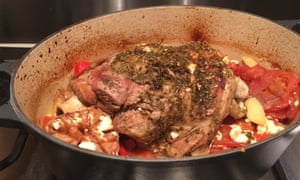
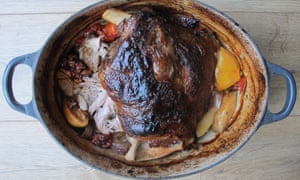
Rick Stein’s kleftico.
Rick Stein’s kleftico. Photograph: Felicity Cloake for the Guardian

The cut of lamb

Most recipes I try call for leg. Rick Stein uses a whole one, while Sebastian’s Taverna in Corfu and Eli K Giannopoulos of the website My Greek Dish plump for pieces. The testing panel, however, is largely with Georgina Hayden, author of Stirring Slowly, who describes kleftiko as her “achilles heel”… but calls for shoulder, as does Tonia Buxton’s recipe.

Though leg looks impressive, and one tester prefers its relative leanness, everyone else feels like it’s a cut better suited to cooking fast and serving pink; the tougher, fattier shoulder, meanwhile, really benefits from slow cooking, becoming wonderfully juicy and rich. It’s also cheaper, which is always a pleasing bonus.

Those short of time might prefer to use Buxton’s leg pieces on the bone, which only need cooking for a couple of hours, though I’m slightly of the opinion that this is a dish that deserves a bit of love, and you’re probably better off making something else.

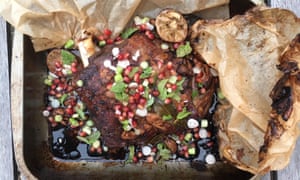
Georgina Hayden.
Georgina Hayden. Photograph: Felicity Cloake for the Guardian

The cooking

While we’re on the subject of time, Giannopoulos marinates his leg steaks for 24 hours before cooking, which gives them a wonderfully deep flavour. If you don’t have that luxury, however, rest assured that it will still be delicious.

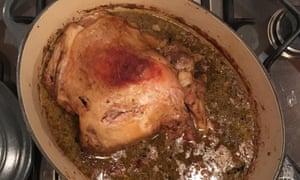
Sebastian’s Taverna is the only recipe to braise the kleftiko on the hob, rather than baking it in the oven. There’s no doubt that this keeps the meat beautifully juicy, but it doesn’t have the same intensity of flavour as the others, especially since the pieces are submerged in water. Adding less liquid, as Stein and Hayden recommend, gently steams the meat, so it’s moist, but still retains its distinctive flavour – rely on its own juices, as Buxton does, and you get a great-tasting kleftiko that’s just a touch dry.

Stein and Giannopoulos both bake their dishes at a high heat: 190C and 180C respectively, but for shoulder, I think Buxton and Hayden’s gentler 160C gives better, more tender results. Equally importantly, make sure it’s in a tightly sealed package, either in a heavy casserole dish, sealed with foil, as Stein recommends, or in a completely closed parcel of greaseproof paper sprinkled with water as in Hayden’s recipe, so no moisture can escape.

Though I suspect this is unorthodox, Giannopoulos’s final blast of heat, with the meat uncovered, does help boost the flavour, just as a melt-in-the-mouth sous-vide steak is made infinitely tastier by a brief dance on a hot grill.

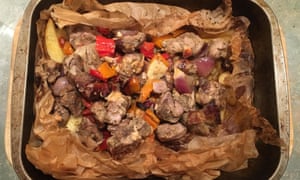
Eli K Giannopoulos.
Eli K Giannopoulos. Photograph: Felicity Cloake for the Guardian

Vegetables

The simplest recipe, from Sebastian’s Taverna, calls for nothing more than onions and garlic, and Hayden, though she uses more spice, sticks with garlic alone. But, as you’ve got the oven on anyway, it makes sense to cook a few vegetables at the same time. Stein, Buxton and Giannopoulos bulk the dish out with potatoes, which are gorgeously rich and soft after a few hours with a joint of lamb (and even better crisped up while the meat is resting as Giannopoulos suggests) – make sure you get the waxy kind, or you’ll be left with mush. Everyone peels them, but I think they’re even more delicious left whole, whatever Greek grannies might think.

Stein and Giannopoulos both also add peppers, and, like Buxton chuck a few tomatoes in there for good measure, which not only look colourful, but, as with anything given such a treatment, taste great too. They’re not absolutely necessary, but they do help make this dish into a one-pot treasure trove.

Garlic, however, is very much necessary – and the sharp flavour of the crushed kind is so different from the mellow sweetness of the roasted variety that I’m going to use it as both seasoning and vegetable. The sugary heat of Giannopoulos’s red onion works similarly brilliantly with the savoury lamb.

Stein adds crumbled feta to his kleftiko, inspired by the one served at a restaurant in Symi, and Giannopoulos goes for kefalotyri, a very versatile hard yellow cheese that, to my surprise, I find in the supermarket, though I’ve never noticed it before. Both have a tendency, however, to dissolve into the vegetables, prompting one tester to discreetly remove several blobs of what she believed to be lamb fat before I set her right. Cheese and lamb are not, to my mind, a marriage made in heaven, but if you fancy adding some, do so right before serving.

Hayden’s recipe has a non-traditional twist right at the end – it’s finished with a scattering of pomegranate seeds and mint tossed in a little red vine vinegar, which is a very pretty idea if you decide not to add any extra vegetables, and serve this with salads instead.

Sebastian’s Taverna.
Sebastian’s Taverna. Photograph: Felicity Cloake for the Guardian

Seasonings

Oregano is an absolute must – I find the dried kind stands up better to long cooking than the fresh leaves – and a couple of bay leaves, as used by Buxton and Hayden, don’t go amiss either. A little acidity in the form of lemon juice, rather than Giannopoulos’ white wine, helps to cut through the richness of the meat and potatoes, so you can keep going back for more. Best followed by a glass of raki and a nap in the shade of a gnarly fig tree.

Perfect kleftiko

(serves 6)
1 lamb shoulder, about 2kg
Olive oil
1 tsp cinnamon
1 tsp dried oregano
1 tsp salt
1 1/2 heads of garlic
2 lemons
1 kg waxy potatoes
1 large red onion
1 red pepper
1 bay leaf
12 cherry tomatoes

Rub the meat with oil. Sprinkle over the cinnamon, oregano and salt, and peel and roughly crush half a head of garlic. Rub all this into the meat with your hands along with the juice of one lemon. Cover and leave for 12 hours.

Heat the oven to 160C. Cut the potatoes into wedges and use them to line the base of a large lidded casserole dish (or use a roasting tin lined with enough parchment paper to fold over the top of the joint on both sides – you’ll probably need two pieces at right angles). Cut the onion into wedges and the pepper into chunky strips, removing the seeds, then add the cherry tomatoes. Place the lamb on top. Cut the remaining garlic and lemon in half laterally, squeeze the lemon briefly over the potatoes, and tuck the shells and the garlic in around the joint along with the bay leaf. Pour 200ml water into the dish. If using a casserole dish, tuck a damp piece of greaseproof on top and cover, if using a roasting dish, sprinkle the overhanging paper with water and fold over and tuck in to form a sealed package. Bake for 4-5 hours until very tender.

Turn the oven up to 220C and roast, uncovered, for 10-15 minutes at this higher temperature, then lift the joint out and set aside. Put the vegetables back in for 15 minutes until starting to brown, then serve with the meat.

Kleftiko: Greek cooking at its best? Do you like to keep yours simple, or make it a meal in itself like this one? And what do you serve with it?

Food in books: Eccles cakes from Cider with Rosie by Laurie Lee

While preparing for a trip to ‘Laurie Lee country’ – the Cotswolds – Kate Young bakes a batch of Eccles cakes, enjoyed by the author in his childhood By Kate Young for The Little Library Café, part of the Guardian Books Network

We lined up in the cold, not noticing the cold, waiting for the doors to open. When they did, it was chins and boots and elbows, no queues, we just fought our way in. Lamplight and decorations had transformed the schoolroom from a prison into a banqueting hall. The long trestle-tables were patterned with food; fly-cake, brown buns, ham-sandwiches.

Cider with Rosie, Laurie Lee

---

I’m heading out of London tomorrow. I’m off to Laurie Lee country: to the Cotswolds, where I hope to walk for hours, write recipes in the garden, drink an indecent amount of tea, and have at least one pub lunch. I found myself, while booking my coach ticket a couple of days ago, referring to this weekend away as “going home”. It’s not, of course, but lately I have been struggling to define where ‘home’ is. The room I live in at the moment is the spare room at the house I am working in. My kitchen things and most of my clothes and books are still in storage in Liverpool. I haven’t been in my parents’ houses, where I grew up, since 2014. So, for now, the wonderful house in the Cotswolds, where I spend Christmas and holidays and long weekends, is a home to return to.

London is vast, and wonderful, but on days when I have been squashed against a door on the tube, or battled crowds in a market, I long for some wide-open space. If I am bound to London, I will head for Epping Forest, or Hackney Marshes, or to Hampstead Heath. But I feel very lucky to be able to spend a couple of hours on a coach, and arrive in the green of the Cotswolds.

Laurie Lee’s Gloucestershire is a beautiful part of the world. The deep valleys, the fields of buttercups, the apple trees, the twisted brambles covered in blackberries. It is so different from the chocolate-box, dry-stone-wall picture of the Cotswolds I always imagined. I can’t wait to be there again.

* A note on the recipe: it is based on the one from St John’s, purveyors of the best Eccles cakes I have ever eaten and uses flaky puff pastry, rather than one with suet. It may not be quite as traditional as the fly-cakes Lee speaks of, but it is glorious.

Eccles cake from Cider with Rosie
Photograph: Kate Young

Eccles cakes

Makes 6

Ingredients
Pastry
(make a double batch if you think you’ll use it - it freezes really well)
65g unsalted butter (cold from the fridge and chopped into small cubes)
250g strong white bread flour
Pinch salt
125ml water
190g block of unsalted butter (cold from the fridge)
Filling
25g unsalted butter
50g dark brown sugar
100g currants
1tsp allspice
Generous grating of nutmeg
For the top
1 egg white
Caster sugar

Equipment
Bowl
Cling film
Rolling pin
Greaseproof paper
Small saucepan
Wooden spoon
10cm diameter plate, to use as a guide
Knife
Pastry brush
Baking tray

1. Rub the smaller amount of butter into the flour and salt until it resembles breadcrumbs. Dribble the water in, bit by bit, until the dough comes together into a firm ball. Shape the dough into a rough cube, wrap it in cling film and put it in the fridge for an hour. Don’t scrimp on the resting time - the butter in this dough needs to be very cold and firm before it is rolled out.

2. Roll the dough out to about 8mm thick. Put the larger block of butter between two pieces of greaseproof paper and bash it with a rolling pin into a rectangle less than half the size of the pastry rectangle. Lay the butter in the middle of the pastry, and fold the pastry edges in and seal them on top of the butter, overlapping where necessary and ensuring that there are no gaps. The major rule with puff pastry is that you need to avoid any leaking butter, so be gentle with the pastry and make sure the butter is really firm after each rest period, or it will spill out. Wrap the butter filled dough in cling film and return to the fridge for at least 30 minutes.

3. If you have warm hands (like me) and you’re overcautious (like me), stick your hands in a bowl of iced water for a minute before this next step. Take the pastry from the fridge, flour your bench and rolling pin, place the pastry on the bench with the short edge parallel to you and roll it out until it is about 60cm long. Try to avoid making it wider if you can. Next, fold the top quarter of the pastry into the middle, then bring the bottom quarter up to meet it in the middle. Fold the whole lot in half though the middle. You should have created four layers of pastry. Wrap it in cling film and rest again, for another thirty minutes.

4. After 30 minutes, repeat the step above. Place the pastry in front of you, with the opening between the folds on the right hand side, and roll it out perpendicular to the edge of the bench. Fold and return to the fridge for another 30 minutes.

5. While the pastry is chilling, prepare the filling. Melt the butter and sugar together in the saucepan, then stir the currants and spices through. Allow to cool completely, in the fridge if necessary.

6. Roll and fold the pastry one more time, then rest for a final 30 minutes. Preheat the oven to 210C. When the pastry is chilled, roll it out to 8mm thick. Cut 10cm rounds of pastry. Put just more than a tablespoon of the filling in the middle of each, then press round the edges of the pastry disc until they’re thinner than the centre. Pull the sides of the pastry up over the filling, then seal the pastry together with your fingertips. Turn the Eccles cake over and roll the base around a little on the bench until it is smooth. Transfer to a lined baking tray. Repeat with the rest of the pastry.

7. Make three slashes (for the Holy Trinity) in the top of each cake with a serrated knife. Whisk the egg white until slightly foamy, then paint it onto each Eccles cake with the pastry brush. Sprinkle the top of each with some caster sugar.

8. Bake for 15 - 20 minutes until golden brown and flaky. Serve either hot or cold, with a hard cheese.

Wednesday, August 17, 2016

Tamal Ray’s picnic recipes – cheese pies, salad and smoothies

The great British picnic still gets our taste buds going, but it needn’t be all dried-out chicken and tepid tea. Avoid meat to celebrate the summer’s fruit and veg instead

Who doesn’t love the idea of a picnic? Now that I am a grown up with a proper job and council tax bills, I like to imagine my summers filled with healthy adult activities: civilised lunch spreads in the park with hampers and blankets, chilled drinks and good food. A recent reunion with old mates laid this fond image to waste. Our evening started with the best of intentions: preparations made for the following day’s outing: the focaccia was baked, the vegetable skewers good to go. The drinks started flowing. I woke up at some point around lunchtime the following day, my head splitting, mouth dry and stomach rolling. For most of my 20s, I didn’t get hangovers. How things have changed. My day was spent shuffling between the kitchen (for water) and bed, those picnic plans in tatters.

Rural idyll: the traditional British picnic.
Rural idyll: the traditional British picnic. Photograph: Niels van Gijn/Getty Images/AWL Images RM

The British summer being what it is, I probably only have a handful of chances left for that idyllic picnic before the autumn damp sets in. This time I will be a bit more wary of alcohol before packing my hamper. For picnic food, I tend to avoid meat. With the freedom to nibble over the course of an afternoon rather than eating everything in one go, food can end up out in the sun for a few hours. A coolbox can help keep things fresh to a degree, but I would rather avoid dealing with anxieties over potentially spoiled meat. That tarragon-infused roast chicken might have seemed irresistible when it was fresh from the oven, but after a few hours gently fermenting in the afternoon sunshine, it won’t be quite as appealing. It’s easier to stick with all the delicious fruit and veg that is around now.

As a regular meat eater – albeit one who is trying to cut down – I try to cook vegetarian food that works as a decent substitute to all of that protein and fills me up. Aubergines have been a godsend. As a child I couldn’t stand their slimy, greasy texture when fried but now I love them grilled or roasted. In a simple salad with bulgur wheat and peppers they make the perfect accompaniment to my filo, halloumi and kale mini pies. And to wash it all down there is nothing more refreshing than an icy glass of watermelon strawberry smoothie. If only I’d had a glass for that hangover, maybe I would have made it to the park.

Halloumi and kale pies

Parcelled up: Tamal Ray’s halloumi and kale pies
Parcelled up: Tamal Ray’s halloumi and kale pies. Photograph: Christopher Thomond for the Guardian

(Makes 12)

175g kale, washed, chopped, stems discarded
250g halloumi
2 handfuls of rocket, finely chopped
1 tsp ground black pepper
1 tsp kashmiri chili powder
1 large onion, diced
2 cloves garlic, crushed
2 tbsp vegetable oil
2 large eggs
4 heaped tbsp Greek-style natural yoghurt
2 tbsp tahini
Juice of half a lemon
50g butter
1 pack (12 sheets) of filo pastry

Steam the kale until softened (about five minutes) and then add it to the rocket.

Slice the halloumi to just over 1cm-thick pieces and brown in a frying pan on a medium heat for a couple of minutes on each side. Chop into 1.5cm square pieces and add to the greens.

Fry the onion in the oil with the pepper, chilli and crushed garlic.

Mix together the yoghurt, tahini, eggs and lemon juice and then combine with the onions, halloumi and kale.

Lay out the sheets of filo on top of each other and cut lengthways down the middle to give two long rectangles. Cut each of these into thirds along the width so you have six piles of filo squares.

Melt the butter in a microwave then use a pastry brush to grease the insides of a 12-hole muffin tin. Lay a square of filo in one of the holes, brush with a little butter and then repeat with three more layers of pastry.

Add the filling to reach the top of the hole and fold over the edges of the pastry into the middle, leaving a gap for steam to escape. Repeat with the remaining 11.

Give the tops of the pies a brush with a little more of the butter then bake in a preheated oven at 180C fan/gas mark 6 for 20 minutes, turning the tray around halfway to ensure even browning.

Roasted aubergine and red pepper salad

Tamal Ray’s roast aubergine salad
Tamal Ray’s roast aubergine salad. Photograph: Christopher Thomond for the Guardian

(Serves 4)

2 large aubergines
1 tsp ground black pepper
Table salt
100g bulgur wheat
100g walnuts
2 roasted red peppers (preserved in oil)
2 preserved lemons
1 bunch of coriander
Juice of 1 fresh lemon
Juice of 1 clementine
1 tbsp honey
½ tsp salt
½ tsp kashmiri chili powder
½ tsp cumin
3 tbsp olive oil

Slice the aubergines lengthways into four or five slices and lay on a roasting tray. Cover with olive oil and a sprinkling of salt and black pepper and roast at 200C/gas mark 6 for five minutes, then turn over for another five minutes on the other side. Once cool, chop the aubergines into chunks about an inch across.

Toast the walnuts at 180C fan/gas mark 6 for eight minutes then roughly chop once cool.

Pour boiling water on to the bulgur wheat then cover and simmer for about 15 minutes until softened. Drain off the excess water and leave to cool.

Chop the red peppers and finely chop the preserved lemons and coriander.

Mix together the fruit juice with the salt, spices, honey, oil and bulgur wheat, then add to the coriander, aubergines, peppers and nuts.

Watermelon smoothie

Tamal Ray with his watermelon smoothie.
Refreshing and delicious: Tamal Ray with his watermelon smoothie. Photograph: Christopher Thomond for the Guardian

Adding a handful of cashew nuts to this smoothie will give a creamier, richer flavour but it’s still delicious without. Make sure all the fruit has been in the fridge before you start and is as cold as possible.

300g watermelon
100g strawberries
1 orange, pulp only
A handful of cashew nuts (optional)
4 ice cubes

Combine the ingredients and blitz in a blender until smooth. Pour into a thermos flask if you’re travelling, so you can enjoy it icy cold.

Tuesday, August 16, 2016

Rachel Roddy’s Roman chicken with peppers recipe

Pollo alla Romana – simply chicken stew, Roman style – a glorious, strong sauce of tomato and white wine, into which browned chicken and sweet peppers collapse at the end. And there are as many recipes for it as there are cooks ...

She bites into the pepper, then, satisfied by its sweetness, buys four kilos. Later in the same short film, she almost throws the most enormous knife at the chicken, then joints it with abandon, at one point nearly taking the fingers off Gigi Ballista, who is interviewing her like an impassioned bear with gravel in his throat. I am not sure how many times we have watched Sora Lella, playing a rumbustious Roman matriarch, cooking pollo alla Romana on YouTube. It must be 10 times. On each occasion my five-year-old, half-Roman son snorts with laughter at this black and white film made in 1967. Is it that his habit of taking a bite from vegetables on the market stall is now vindicated, or is it the ever-exciting knife, or perhaps the familiarity with the broad Roman dialect he is delightedly absorbing at his school in Testaccio – which makes him shake his pinched fingers at my Italian dressed in an English accent?

“Pollo alla Romana, il piatto piu forte di Roma.” Chicken Roman style, the strongest dish in Rome, she says. It is a strong dish, chicken with a stew of tomatoes, red peppers and olive oil which is as rumbustious as Sora Lella herself. It is a dish that tastes of Roman summer: sun-soaked, fullsome and a bit much if you are not in the mood. But if you are, it is gorgeous, the stewed tomatoes and peppers like a well-matched couple, balancing each other out, acidity tempered by sweetness and vice-versa, smothering the chicken.

In Rome, pollo alla Romana is often eaten on 15 August, Ferragosto, a holiday that dates back to 18BC when Emperor Augustus added a day of ferie (holiday) to the other ancient festivals Vinalia (in honour of the grape harvest), and Consualia (in honour of harvest and stored grain). This allowed a longer August rest after the backbreaking agricultural labour of the previous weeks. In the past the whole city would shut down to celebrate. Nowadays the city, already quiet and parched in August, becomes even more subdued, as those who can head to the beach or the hills, while those who remain enjoy a good lunch.

I am going to avoid the word authentic here, because authenticity is a tricky notion, and to use it here anyway seems at odds with the joyful anarchy of home cooking, in which there are as many recipes as there are cooks. Sora Lella’s recipe though is an iconic way to make it. The chicken, once jointed, is browned then cooked with wine and tomatoes until tender. The peppers are cooked separately with more tomatoes and onion, then mixed with the chicken at the end. My friend Alice, who makes a mean version, cooks all the ingredients together, the peppers and tomato collapsing into a scarlet stock in which the chicken simmers. I like both these ways. My version lies somewhere inbetween, with a roasted pepper twist, which I think is my invention but isn’t. Isn’t the smell of roasting peppers drifting through the kitchen a sultry one? You want the flesh to char and blacken, then, after a steam, the thin skin should pull away easily but messily to reveal sweet, velvety flesh that wraps around your fingers. Just before the end I add the roasted peppers to the tomato and chicken. I let the dish sit and sit – until the next day if I can.

Chicken with peppers transforms after a rest, the flavours deepen and sink into the chicken flesh, which becomes rosy. In Rome, pollo all Romana is usually served for lunch, as most Romans can’t digest peppers after 4 o’clock – something they may well mention in conversation with you. Bread is essential to mop up the juices. I also like boiled potatoes, cooked until soft and blurred at the edges, so easily mashed into the red juices. To follow, green salad perhaps or green beans with olive oil and lemon, then sliced white peaches dropped in the end of your wine so they too are a bit drunk. Then a long nap.

Chicken with peppers

I think it is worth peeling the tomatoes, but it is up to you. Tinned plum tomatoes also work.

Serves 4
1.5 kg chicken, jointed into 8, or 8 thighs
60g pancetta or bacon
Extra virgin olive oil
1 garlic clove
A sprig of rosemary, finely chopped (optional)
Salt and black pepper
150ml dry white wine
800g ripe, fleshy tomatoes, peeled and chopped
4 large or 6 small red or yellow peppers

1 Joint the chicken, making sure the pieces are at room temperature and dry. Cut the pancetta into short batons. In a large deep frying pan or heavy casserole, warm 2 tbsp olive oil, then fry the pancetta until the fat has rendered. Working in batches, if necessary, add the chicken pieces skin-side down and cook until a light golden crust has formed – about 8 minutes – then turn and brown the other side.

2 Assess how much fat is in your pan, adding more olive oil or pouring fat away. Peel and gently crush the clove of garlic and add to the pan along with the chopped rosemary, if using. Season with salt and pepper.

3 Add the wine and let it bubble away for a minute or two, then add the tomatoes. Cover the pan for 10 minutes, lifting the lid to stir halfway through. Then half-cover and cook over a medium-low heat for 45-60 minutes or until the tomatoes have reduced to a rich sauce and the chicken is tender. If the sauce looks dry, add a little water.

4 Meanwhile, prepare the peppers by roasting them whole at 200C/400F/gas mark 6 until they are charred and floppy. Tip them into a bowl and cover with clingfilm for 10 minutes, by which time the skin should pull away. Discard the skins and pips, then rip the pepper into thick strips.

5 In the last 10 minutes of cooking time, add the peppers to the pan so the flavours can mingle. Allow the dish to sit for at least an hour – overnight even. Eat room temperature or re-heat gently.

• Rachel Roddy is a food blogger based in Rome and the author of Five Quarters: Recipes and Notes from a Kitchen in Rome (Saltyard, 2015) and winner of the 2015 André Simon food book award

Monday, August 15, 2016

Anna Jones’ recipes for two summer vegetable tarts

A tart made with crisp pastry and vegetable filling is perfect for a light summer supper. These two recipes, packed with seasonal courgettes and ripe tomatoes, are easy to make and hit the spot without leaving you full

A month ago, in a little church on an island surrounded by the sea, I got married. As the sea pulls back at low tide, it uncovers a rocky path to the church. We walked across in a haze of sea mist and it felt like something out of a gothic novel. It was, as weddings should be, a fairytale day.

After a misty start, the sun broke through as we gathered on the lawn for drinks and feasted on slow-cooked fennel arancini, dusted with pecorino and a drizzle of honey. There were fried courgettes with lemon and rosemary aioli and garden crudites in every colour of the rainbow. We drank our G&Ts with gin from Snowdonia and finished the meal with a tower of brown-sugar meringues, cherries, lemon curd and myrtle syrup.

The hardest part of picking the menu was what to put at the heart of the meal. How I eat has become so defined by things to share, but something about the occasion made it feel right to have a beautiful plate of food for each person. After thinking, trying and tasting a number of options, we plumped for a tomato tarte tatin: it screams summer in its vivid colours and flavours, and it was universally loved.

Since then, I’ve been on a roll of summertime tarts – crisp pastry with a soft, light vegetable filling. They satisfy without leaving you too full. These two tarts hit that sweet spot, and unapologetically use shop-bought pastry – filo and puff – both of which I love to make, but perhaps not on a summer’s day.

A wedding-worthy tomato tarte tatin

This is the simplified version of the tart we ate on our wedding day – a perfect summer dinner. Thanks to the wonderful Sarah and Stuart from Bubble and Squeak Food for sharing the recipe.

Roasting the tomatoes takes a few hours but requires very little effort, so don’t be put off. I find it easier to cook the tomatoes overnight: I roast them at 100C/210F/gas very low for an hour then turn off the oven and leave them until the morning. This tart can be assembled ahead of time and kept in the fridge.

Serves 4-6
800g of good ripe tomatoes (I use a mixture of different coloured ones, both big and cherry)
Salt and freshly ground black pepper
Olive oil
3 red onions, peeled and finely sliced
1 tbsp red wine vinegar
1 tsp brown sugar or honey
A small bunch of thyme or oregano, leaves picked
Butter, for greasing
A 200g pack of all-butter puff pastry
1 egg, beaten
50g of baby capers, drained

1 Halve the tomatoes and put them cut-side up on a baking tray with a little salt, pepper and olive oil. Bake them in a low oven at 100C/210F for 3-4 hours to slowly roast and sweeten. You may need to take some of the smaller tomatoes out a bit earlier, so keep an eye on them. Once cooked, allow to cool a little.

2 Next make the caramelised onions. Heat a little olive oil on a medium heat and add the sliced onions. Cook for 10 minutes to sweeten and soften before adding the vinegar, sugar or honey and the leaves from a few sprigs of the oregano (saving the rest for later) and a good pinch of salt and pepper. Cook for 30-40 minutes until really soft and sticky.

3 Butter a cast-iron or heavy frying pan about 24cm in diameter and lay the tomatoes cut-side down in a kind of mosaic, fitting them all together. Once they are all squeezed in, scatter the onion over the top.

4 Roll out the pastry until it’s about 1cm thick and cut out a circle just bigger than your pan. Lay it over the onion mixture and tuck in the sides. You can stop here and put the tart into the fridge if you like.

5 Once you are ready to cook, preheat the oven to 200C/400F/gas mark 6. Brush the pastry with a little beaten egg and put it into the oven for 25‑30 minutes until golden all over and bubbling around the edges.

6 While the tart is cooking, heat a little olive oil in a frying pan. Have a plate lined with some kitchen paper and a slotted spoon to hand. Once the oil is hot, add the capers. They will bloom into little flowers and crisp in just 30 seconds or so. Lift them out and quickly drain them on kitchen paper.

7 Once the tart is golden and bubbling, take it out of the oven and allow it to sit for 5 minutes before running a knife around the edge and carefully turning out on to a plate. Scatter the capers over the tart before serving.

Summer frying pan tart

This is a tart quick enough to make on a weeknight. I use an ovenproof frying pan instead of a tart tin, and a vegetable filling with super-quick grated courgettes and shredded chard.

Filo tart - Anna Jones
Sweet courgettes and rainbow chard make up the filling of this filo pastry tart. Photograph: Issy Croker for the Guardian

Serves 4-6
2 red onions
Olive oil
500g courgettes
A few sprigs of thyme, leaves picked and chopped
½ bunch of fresh oregano
3-4 sheets filo pastry
25g butter, melted
200g rainbow chard
2 eggs
A few sprigs of mint, leaves picked and chopped
100g pecorino or parmesan cheese (I use a vegetarian one)
1 unwaxed lemon
100g feta cheese
100g black olives (I use kalamata)

1 Preheat the oven to 220C/425F/gas mark 7. You’ll need a 24cm ovenproof frying pan.

2 Put a saucepan on a low heat while you finely chop the onions. Turn the heat up to medium, add a little olive oil and cook the onions for 5 minutes, until soft and sweet.

3 While the onions are cooking, peel and roughly grate all the courgettes but one. Add the grated courgette to the onions along with the thyme leaves and oregano, and cook for 5–10 minutes, until the mixture is dry.

4 Meanwhile, unwrap the sheets of filo and lay them one by one over your frying pan, brushing each sheet with a little melted butter before layering. Leave a little of the pastry to overlap around the edges – you will fold this in later. Keep laying the filo in the pan until you have a good, sturdy 3- or 4-sheet layer all over – you may need to patch it together bit by bit if you have small sheets. Slice the remaining courgette into thin coins.

5 Once the courgettes have been frying for around 5 minutes, add the chard stalks and cook for a few more minutes, then scoop the mix into a bowl to cool. Crack in the eggs, add the chopped mint and grate in the pecorino or parmesan. Season with freshly ground black pepper and mix together well. Spoon the courgette mixture into the pan and put on a medium heat.

6 Working quickly, shred the chard leaves and toss with the juice and zest of the lemon and a little oil. Scatter the chard on top of the courgette mix, followed by the little coins of courgette, pushing down a little into the mixture. Dot with the feta and de‑stoned olives on top. Fold the excess filo pastry back over the filling to form a wavy edge. Put on the bottom of the oven and bake for 20–25 minutes, or until the pastry is golden and crisp.

7 Remove from the oven, cut into six generous slices and serve with a lemon-dressed green salad.

  • Anna Jones is a chef, writer and author of A Modern Way to Eat and A Modern Way to Cook (Fourth Estate); annajones.co.uk; @we_are_food